Uncategorized

The Beauty of Silence

I had been wondering where I would go to church for the last Sunday of my sabbatical, knowing that there wouldn’t be another opportunity for a long time once I get back to St Nicholas.


I thought about it for a long time.  One church I wanted to visit was not having a service, I couldn’t find the time of the service for another, and so on.  I was stuck, and needed to decide.  Then Bev said, “Have you thought about the Quakers ?”  That was it!  Of course.  With their stand on peace, and their history of protest and social action, it had to the the Quakers.

So at 10.20 am yesterday, I was sitting outside the Hull Quaker Meeting House.  I was warmly welcomed and shown into the meeting room, and because it was my first time, I had been given some pamphlets to help me understand a little about Quaker worship.  There was no beginning to the meeting as such.  No words of welcome or explanation, but that was fine.  A characteristic of Quaker worship is silence and waiting, which is exactly what we had.  A few late comers meant that we didn’t enter a real silence for about 15 minutes, but then there was (for me anyway) a beautiful silence for about 30 minutes.

During this time, I thought back over the last few weeks; I tried to remember (with some success) the events of the early chapters of Mark’s Gospel; I prayed for my family, and for the people I had met in America; I listened for God in the silence.

At 11.15, someone stood up.  He paused for a few moments, seeming to choose his words, and then spoke briefly about one of the articles of the book ‘Quaker Faith and Practice’:   Article 2.55 Remember that to every one is given a share of responsibility for the meeting for worship, whether that service be in silence or through the spoken word. Do not assume that vocal ministry is never to be your part. If the call to speak comes, do not let the sense of your own unworthiness, or the fear of being unable to find the right words, prevent you from being obedient to the leading of the Spirit.

You can find the full version of Quaker Faith and Practice here:

He spoke for a few minutes and then sat down.  Then someone else stood, waited a few moments, and also spoke for maybe 3 or 4 minutes and sat down.

And then, without any difficulty, we went back into silence for the last 10 minutes of the meeting.

The whole experience reminded me in many ways of my formative experiences of church in Open Brethren Assemblies.  Like Quaker worship, our Sunday morning meeting was based on an understanding that worship was to be guided by the Holy Spirit.  For that to happen, there must be a degree of silence and waiting, and into the silence, God would lead different people to share a scripture, a hymn, a prayer, or a reflection.  In both traditions, there is no leader of the worship apart from the Holy Spirit.  

There are some similarities: Brethren, like Quakers, tend to avoid set prayers and creeds, and both are led by a group of ‘Elders’.  But there are also huge differences: Brethren are typically very conservative and narrow in their theology, whilst Quakers accommodate a very wide spectrum of beliefs.  The main act of worship in the Brethren is ‘The Lord’s Supper’ (Communion), whereas Quakers emphasise the experience of the presence of God in us, without the need for outwards symbols.

Although there is no link between Open Brethren and the Quakers, some of the earliest Brethren were originally Quakers and there was a Quaker influence on the distinctive character of Brethren worship meetings.
Uncategorized

The Seed. Mark 4:13-20

Is the parable open to multiple interpretations, or is it making one point ?  

Many scholars (most ?) think that these verses were added by the early church.  The interpretation offered in these verses make the parable an allegory, with each part of the parable representing something different. The purpose of the parable is then to encourage self examination … How does my life match up ?  Am I being fruitful ?  Are there things that are choking the work of God in my life … etc.
Another widely held view (Jeremias) is that Jesus did not intend the parable to be treated in such a way.  The early Christians added these verses, but Jesus was actually making just one point.  That is, God’s ultimate purpose  (the Reign of the Kingdom of God) is now visible and will be fully achieved in the end.  The fullness of the Kingdom is represented by the harvest at the end of the parable in v. 9.
Whichever view you hold on how to read the parables, it is clear that this parable is about the work of God in the world, and that the seed is the image chosen for this work.
At the beginning of my week’s learning about trauma and trauma healing, we were all invited to share a symbol of some trauma that we had known.  The events shared were deeply moving, as people talked about some of the most painful experiences it is possible to have.
At the end of the week, we were invited once more to share – this time a symbol of hope for recovery.  One of the group said simply – My symbol of hope is this group – this small group of people who are committed to being involved in bringing transformation to traumatised people and situations.  I think we were 26 in number, not many.  But in using the seed as a picture of the kingdom Jesus gives hope that even a few people can make a big difference.
You see how it is with the seed …. says Jesus … this is how it is in the Kingdom of God.
Uncategorized

Forgiveness

During my week of learning about trauma, we explored the ways in which we can move from destructive patterns of thinking and acting to a more positive way of living.  One part of this healing process is forgiveness, and we spent some time thinking about what forgiveness is, and what it is not.

Here is what we came up with:

What Forgiveness is:

Hope

Saying (not necessarily with words)I still love you

Gift 

Something that we discover it is possible to do

Different kinds of choices – intellectual, emotional

Finding that you have the power to choose

Empowering

Liberating

Gives security to ‘the other’

A process, not a one off event

Peace of the heart

Healing

Shocking

Releases the forgiver

Can be given without being asked for

What Forgiveness is not

Is not accepting that things can stay as they are

Does not eliminate responsibility

Cannot be forced

It is not the same as reconciliation

Not the end of pain

Not just words

Does not erase scars

Is not expressed the same in all cultures

It is not always possible to do

It is not always desirable

Not necessarily two way

It is not easy

It does not minimise wrong doing

It does not have to be received

You forgive the person, not the wrong doing.

I am reading ‘The Non Violent Atonement’ which is a challenging read in every way.  It seems to link with the above thoughts about forgiveness.  The thing that struck me most was the thought that we can take a decision to forgive someone before they ask for it, or maybe before they want it, or even know that they need it.  It seems to me that this is what God has done.  God has forgiven the world.  But if we are to be fully reconciled to God, we need to receive that forgiveness.

The Christian Gospel is at its heart, saying that God’s action in the world (supremely in Jesus) is to bring about God’s perfect reign that is characterised by Justice and Peace.  Central to this action of God is Jesus, who in his life, death and resurrection fully displays that reign of God.  For us to be co-workers in this ‘Kingdom Project’ of God we need to recognise the sinfulness and rebellion of humanity, and the need to be reconciled to God.

Full reconciliation requires both God’s forgiveness and our repentance.  But – God’s forgiveness is not dependent on our repentance.    In forgiving sinful humanity, God is offering hope, and saying that he still loves us, in spite of our sin and rebellion.  But for full reconciliation, that forgiveness must be accepted. 

Sometimes, we are privileged to hear of this kind of forgiveness being lived out.  

In July 2005, Anthony Walker was murdered in a racist attack.  At the trial of his killers, his mother, Gee said this:  “Do I forgive them? At the point of death Jesus said ‘I forgive them because they don’t know what they did’.   I’ve got to forgive them. I still forgive them. My family and I still stand by what we believe: forgiveness. It’s been real hard going, but I feel justice has been done. I’m sure they will get the maximum sentence.  She acknowledged that it would be difficult to move on in the aftermath of her son’s death, but added:  We have no choice but to live on for Anthony. Each of us will take a piece of him and will carry on his life.”

When asked if she hated her son’s killers, this is what she said:

Gee: I can’t hate. I brought up my children in this church to love. I teach them to love, to respect themselves, and respect others. We’re a huggy family and they go out and portray that same image. We’re a forgiving family and it extended to outside, so it wasn’t hard to forgive because we don’t just preach it, we practise it.

Dominique: (Anthony’s 20 yr old sister) Seventy times seven we must forgive, that’s what we were taught, that’s what the Bible said, that’s what we have to do. It’s an everyday thing. It is hard, it is so hard, but you get through it. It eases the bitterness and the anger if you can wake up in the morning and think ’forgive, forgive, forgive’.

Gee: It is a life sentence. What does bitterness do? It eats you up inside, it’s like a cancer. We don’t want to serve a life sentence with those people.

 Has your faith been tested by Anthony’s death?

Gee: (Laughs) Has my faith been tested? Lord, yes. My name’s Gee, not Jesus! It’s been hard, so hard, but I have to follow what the Lord teaches. It is easy to say those things, but when it is you who must do them, it is hard.

Gee: “Why live a life sentence? Hate killed my son, so why should I be a victim too? Unforgiveness makes you a victim and why should I be a victim? Anthony spent his life forgiving. His life stood for peace, love and forgiveness and I brought them up that way. I have to practice what I preach. I don’t feel any bitterness towards them really, truly, all I feel is… I feel sad for the family.

Uncategorized

They Don’t Get It! Mark 4:10-12

As we have seen, the first three chapters of Mark go at a rapid pace.  In them, we meet this person Jesus, who at times draws attention to himself and his message, and at other times tells people not to say a word about what they have seen.  

On the one hand Jesus seems to be claiming some kind of messiah status, in what he says – for example claiming authority over sin (2:10) and over the Sabbath (2:28); and in what he does – healing and casting out demons.  On the other hand he wants to stay ‘under cover’ (1:34, 44 & 3:12).


The way the parable of the sower is presented in chapter 4 almost mirrors this paradoxical picture of Jesus that Mark has already painted.  It seems that Jesus is intent on revealing himself and yet hiding himself all at the same time.  The phrase ‘Open Secret’ is not original, but it seems to fit with what is happening here.


It is as if Jesus is aware that his message will be need to be an ‘open secret.’  

Robert Capon (In the Parables of the Kingdom) puts it something like this. (I paraphrase)


Jesus knows that he has a special mission from God.  He also knows that what he will say and do will upset some people, especially the religious leaders.  (He will mix with outcasts, he heals on the Sabbath, he claims to forgive sin).  So he tries to keep a low profile and stay out of the public eye as far as possible.  Now in chapter 4, we reach a major turning point in the Gospel as Jesus starts to teach.  It’s as if he makes a conscious decision to be provocative and cryptic in his method.   He knows that there will be things about him and his message that will go against people’s expectations of a messiah.  He is not going to be the kind of messiah that people expect, or even want.  So, when he comes to tell the parables, it’s as if he takes this hidden, mysterious, upside down approach and makes it central.


Here are the verses that follow immediately after the parable:


When he was alone, those who were around him along with the twelve asked him about the parables. And he said to them, “To you has been given the secret of the kingdom of God, but for those outside, everything comes in parables; in order that ‘they may indeed look, but not perceive, and may indeed listen, but not understand; so that they may not turn again and be forgiven.’”


Jesus is not pronouncing judgment on unbelievers, but saying “This is how it is”.  The kingdom of God is not what you think it is.  There will be people who will simply not get it.


In an earlier post, I wrote about a woman who had met her daughter’s killer as part of a restorative justice programme.  When the mediator who was arranging the meeting first went into the prison to meet Gary (the killer), the prison governor did not understand what the mediator was talking about.  His mind was so locked into justice as  retribution that he could not get his head around what they were trying to do in meeting Gary.


And yet, when Linda met her daughter’s killer something amazing happened.  Over a period of four hours they talked, and at the end Linda embraced Gary in a hug. In that encounter they both changed.   Some of Linda’s family cannot watch that film.  They have heard her talk about what happened, but they don’t understand.  They have seen the difference in her, but they do not ‘see’ it for themselves.  They have not reached a turning point in their own lives.  For them, there is still no forgiveness.

Uncategorized

Parables. Mark 4:1-9

In this post, I’m quoting some extracts (in italics) from an article by Walter Wink. 

The Parable of the Sower:  Over the centuries, scholars have debated the correct way to interpret the parables.  For a long time, people read the parables as allegories, where each part of the parable stood for a single idea.  in the parable of the ten maidens, for example, the bridegroom equals Jesus, his delay equals the overdue Second Coming, the wedding equals the Kingdom, the shut door equals the Last Judgment, the wise maidens equal the true believers, the foolish maidens equal the backsliders, and so forth (Matt. 25:1-13).

There are problems with reading parables in this way.  It not only fixes the interpretation of the parable to one meaning, it also fixes the way in which we read the parables.  In time, this method of interpretation was rejected by scholars, and over the course of the 19th century, it became the norm to believe that a parable had one, and only one central point.  That view has held sway pretty much since then.  However, Walter Wink makes the point that parables are meant to point us to something new, and that once we decide that it has only one meaning, we pretty much close the door on the parable speaking to us in the way that parables are intended to speak.  This ‘one point’ view of interpretation is actually just a variant on the fixed allegorizing that it was meant to replace.

The fallacy of the one-point theory should have become manifest the moment it became clear that scholars themselves could not agree on what the one point was — though each was certain that he knew! The fact is that there is no one point of entree into these parables, and no single exit. That is precisely why they are so timeless, so universally potent, so masterful. 

A parable (or simile, allegory, exemplary story or any other figure) stands in an intermediate position between the known and the unknown. Valid interpretation presses through the metaphor to the unknown; … in valid interpretation we feel our way into each symbol in order to sense the surplus of meaning that beckons us beyond ourselves to discover something new. …  Valid interpretation is a listening to what cannot be heard without the parable; 


To hear a parable, then, is to submit oneself to entering its world, to make oneself vulnerable, to know that we do not know at the outset what it means. Parables function much as the Zen koan, or the tales of the dervishes, to tease the mind out of familiar channels and into a more right-brain view of things. Parables have hooks all over them; they can grab each of us in a different way, according to our need.

Are we discouraged about our ministry and its meager results? Then we can identify with the sower and look with new hope toward an unprecedented harvest. Have we unwittingly filled our lives with activities, cares, false loves, which threaten to choke off the ultimate values to which we once so flamingly committed ourselves? We might then see ourselves as thorn-infested soil. Are we just grazing the surface, dabbling in the life of the spirit, half-heartedly dipping into the struggle for a just and humane world? Are we perhaps the rocky soil? Or have we become stupefied by dogma or our own vaunted pride in reason, so that we can hear nothing new? Have our paths become ruts? This is but a skimming of meanings I have heard people find in the puzzling and inexhaustible riddle of the parable of the sower (Mark 4:1-9)

I have found that one very rich way of approaching the parables is through the medium of Godly Play. 
Godly Play teaches children the art of using religious language – parable, sacred story, silence and liturgical action – helping them become more fully aware of the mystery of God’s presence in their lives.

In Godly Play, we ask wondering questions to go deeper into the sacred story or parable.  If we were looking for fixed meanings, there might be a danger of allegorizing the parables, but the Godly Play method itself is a safeguard, as it gently leads us to open our hearts to new things that God might be saying to us.

 So, when telling the Parable of the Sower, we could ask: ” I wonder what makes the good soil good ?” And “I wonder if the rocky (and thorny) ground will always be rocky (thorny) ?”

As I read the parable today, I am thinking about the last few weeks, and praying that what I have learned becomes a part of me, and bears fruit in my life for peace.
Uncategorized

Family. Mark 3:31-35

31Then his mother and his brothers came; and standing outside, they sent to him and called him. 32A crowd was sitting around him; and they said to him, “Your mother and your brothers and sisters are outside, asking for you.” 33And he replied, “Who are my mother and my brothers?” 34And looking at those who sat around him, he said, “Here are my mother and my brothers! 35Whoever does the will of God is my brother and sister and mother.”

Mark has already posed the question earlier in the chapter about family, and loyalty:  They (his family) went out to restrain him, for people were saying, “He has gone out of his mind.” 

And now Jesus responds to the question by talking about a new kind of community that is not based on blood ties, but on a commitment to do the will of God.  In conversation with those from the Muslim world, and from Burma, I have been reminded of precisely this issue.  Those who  have decided to follow Jesus in some countries take a huge risk.  They may be shunned by their family.  They may be discriminated against in the job market, they may be imprisoned, even lose their life.

Even in the USA where Christianity is the major religion, to be be a disciple of Jesus can be difficult.  Working in the area of peacebuilding may test relationships with Christians who have supported the US government’s foreign policies of intervention.  One of my new friends grew up in a church that was very nationalistic, and it has been hard for him as his views on violence and war have increasingly distanced him from his home congregation of which his father is the pastor.

Being a part of the ‘New Community’ that Jesus offers us will take us in directions that will not only enrich our lives, but challenge them severely.  May we know God’s grace as we continue the journey.
Uncategorized

The hour I first believed


I have a lot of reading to do, following up on my time at the Summer Peacebuilding Institute, but I’ve just got stuck into a new novel, and I know I’m going to find it hard to put that down to read the textbooks that I have brought back with me.  I had ordered it just before I left for the States, and as I start to read it, I’m struck by how much it fits with what I have been learning, centred as it is around one of the most traumatic events in recent years in the US.

The book is the latest by American author, Wally Lamb, and tells the story of a married couple who both work at Columbine High School in Colorado.  The book deals with the aftermath of the shooting at Columbine, and the various traumas that the characters experience as a direct result of the shooting, and the more hidden traumas from the past that are triggered by the incident.
Early on in the book, we meet a young girl who really struggles with school, and with life.  Her early life is a story of rejection and abuse, and the school system seems unlikely to help her.  It reminds me of Gary Brown (see post ‘Hurt People Hurt People’).
It also reminds me of the work of psychologist Martha Cabrera in Nicaragua.  She describes how so many schemes for development have failed in that country, because inadequate attention has been paid to the results of trauma from years of violence and political instability.  When working with survivors of Hurricane Mitch in 1998, she found that people had an even greater need to talk about other losses that they had never voiced, including wounds related to the country’s political history.
We have not experienced anything like the problems of Nicaragua, but I am sure that even in our community there are people who have not had the opportunity to work through experiences that have devastated their lives, whether it is the floods of 2007, or the loss of a child, or sudden bereavement, or living with abuse …. 
In addition, we in Britain still suffer from the ‘stiff upper lip’ and  ‘grin and bear it’ attitudes.  Many of us are unwilling to face the difficult issues in our lives.  Many of us deal with trauma by pretending it hasn’t happened.  When faced with others who are traumatised, I have often come across the attitude – ‘Isn’t it time you moved on?’    What we need is an approach that is not afraid to listen to another’s story, however many times they need to tell it.  A willingness to walk with people down the road of recovery, even if it takes years.  (Some research indicates that the length of time for recovery is directly related to how long ago the trauma took place).
How can we create an approach to working with trauma that provides good results ?  Only by understanding a unity of body, mind and spirit.  By understanding that as human beings, we are a single reality, that finds expression in different ways.  Trauma affects us physically, mentally, and spiritually, and recovery will also involve all aspects of who we are.
Uncategorized

Back Home


I’m back in England and glad to be home after 4 and a half weeks in the US and 3 weeks away from family.  It was my fourth time in America, and it was great to experience again what is in many ways such a fantastic country. However, this time, I come back with more appreciation of England than I remember from previous visits. (Maybe it’s advancing age)!

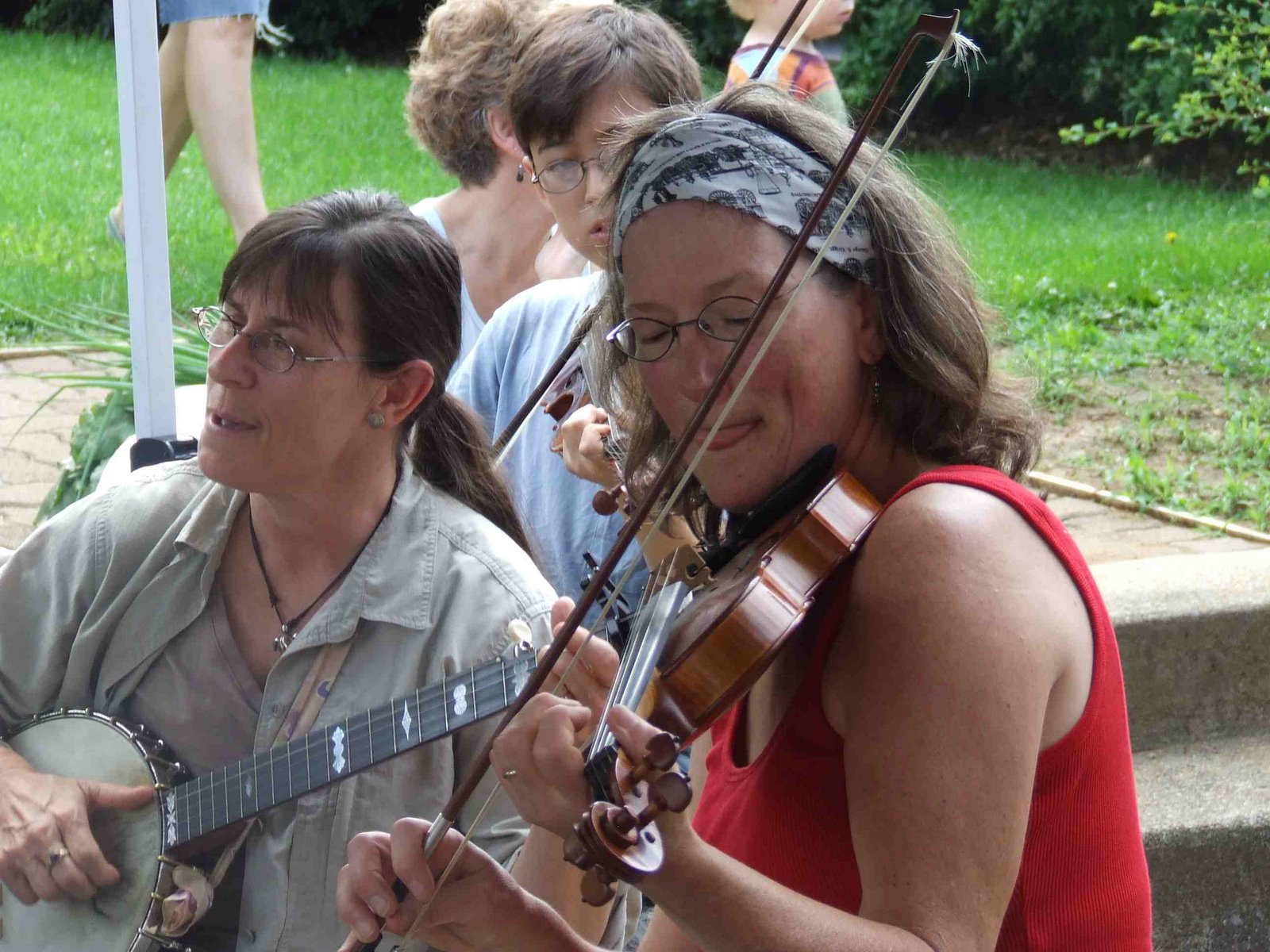
Last Saturday, a friend and I decided that we would walk the two  miles or so downtown to visit the farmer’s market.  There was going to be a bluegrass jam, and it would be my last chance to hear some local music.  However, walking the two miles proved to be a challenge, with no pavements for most of the way.  It was either walk through someone’s front garden, or risk being knocked down.  (Most houses don’t have walls or fences around them, so it wasn’t too much of a challenge, but it did bring home to me how much they are dependent on the car).  Public transport (apart from big cities) is generally very patchy, and people travel everywhere by car.  As we walked into the downtown area, it felt like a ghost town.  This was a Saturday morning, but there were very few people around, and I thought about my own home town and the crowds of people who would be walking into town for the Saturday market.
Urban planning in the US seems to allow for far too much sprawl and ugly developments.  So however much some of us complain about out of town shopping centres, and the effects they have on towns, a trip to the US puts things in perspective.  My town of Beverley has about 35,000 inhabitants.  The whole town is contained within a area about 2 miles across.   Harrisonburg Virginia, population 45,000 (of whom 20,000 are university students) covers at least twice the area of land, with shopping centres all along the route from the downtown area to the interstate 81.  The downtown area has a very pleasant feel, with some nice restaurants but few shops and businesses. (Although it’s not bad by US standards).  

One of the big discussions here in Beverley in recent years has been to do with building retail developments out of the town centre.  The US experience seems to suggest that once you have developments of this kind with large shopping centres,  all that is left for the historic town centres is restaurants, banks, antique and gift shops.  The equivalent in England seems to be charity shops, estate agents and building societies.   If our town centres are to be more than ghost towns, then they must cater for some of our basic shopping needs.  
Well, that’s enough of a rant on that topic.  I’m back in the ‘green and pleasant land’ again, and pleased to be here.
Uncategorized

How to turn a groundhog into a chicken


I was a guest at the house of Gerald and Sara Shenk on Sunday. They are part of the leadership of a relatively small Mennonite Church that started in 2007 here on the university campus at Harrisonburg. They call themselves ‘The Table’, and are centred around hospitality and community.  When the church was in its early days, they decided that they wanted to practise hospitality in two particular ways: a weekly celebration of communion, and a weekly shared meal.  (This is very different to the usual Mennonite practice of celebrating communion just twice a year, at Easter and in the autumn).  


Since a weekly celebration of communion has always been a part of my practice, I was keen to experience this in a Mennonite setting, so I walked the short distance from my dorm to the beautiful setting of the church, a small building on a hill overlooking the campus, with views over the Shenandoah valley to the distant mountains.  The service reminded me a little of childhood experiences of worship, centred around singing, scripture readings, silence, and reflections from different members of the church. It felt good to be there.  


After the service we walked to the home of Gerald and Sara Shenk for a delicious lunch of chicken casserole and rice. (Gerald had been my teacher in the first week here, and Sara also teaches at the university).  It was at the meal that I learned some interesting things about Harrisonburg and chickens. Harrisonburg is something of a ‘chicken capital’ in this part of the world.  Although the population today is only 45,000, Harrisonburg received the title of ‘city’ early in the 20th century,  and like many towns this size it has universities and is an important business and commercial centre for this part of the Shenandoah Valley.  Chickens are reared intensively and processed all around the area, which has led to an influx of workers, notably from Mexico and Central America.  Probably as a direct result of this, English is taught as a second language to more children in Harrisonburg schools than in the outlying districts of Washington D.C. (Washington is a very multi ethnic city)


This enterprise contributes to the economic growth that Harrisonburg has experienced even during the recession, but there are some rumblings of discontent.  The chicken industry rears just one breed of chicken on the grounds that it is easier to prevent disease if you only have one breed.  In fact the city has passed a law that no one is allowed to keep chickens within the town itself, for fear that people will rear other breeds which may pass on diseases to the intensively farmed chickens.   At least one person, keeping a variety of breeds within the city limits, has had his chickens taken away.  One of the things that interested me about this debate was that it seems to be centred around the issue of freedom to rear chickens as you wish, rather than on the animal welfare issues for the intensively farmed birds.


One young couple sitting round the table – Ryan and Janey – are just starting to rear chickens, and had some questions, which resulted in the following discussion: The chicken coop should be moved regularly, every two or three days, to ensure that the grass in the back yard is not permanently killed by the chicken poop.  There was the added problem of flies.  When the coop has been moved, flies gather around the remaining pungent chicken poop, and the smell gets a bit rich.  There was some discussion as to what might help deal with this awful smell.  Ryan had been especially concerned to know the answer to this question after their next door neighbour had commented on the smell, and asked if something might be done.  After some research, Ryan was advised to put some lime on the offending poop.  So far this seems to be working.


Kirk offered the fascinating information that chickens love to eat maggots, and will eat them in preference to grass.  So one way of preserving the grass is to provide some maggots!   Kirk had a friend who offered this tested method: get a 5 gallon plastic drum.  Drill holes in it, especially all around the bottom.  Put a dead groundhog, skunk, or possum into the drum.  The flies will come, feed on the groundhog, lay their eggs which after three days will have developed to maggots.  The chickens can feed on this rich feast of maggots through the holes in the bottom of the drum.


Another tip was to use the chickens as a means of pest control.  Their preference for maggots and other bugs makes them a very effective substitute instead of chemical means of control.  let the chickens loose in the garden, and they will eat up the bugs.  And because chickens prefer bugs to greenstuff,  they will eat the bugs before they start in on your carefully tended veg in the garden!  However, timing is an issue.  Leave them loose in the garden for more than a couple of days, and you will soon see them tucking into your precious lettuce etc.


And finally.  Winter rye makes a good crop apparently for chicken feed.  Towards the end of the season, plant some winter rye, and when it gets to  about 4/5 inches, give the chickens a run in the garden as they feed on this winter banquet!  P.S.  This last gem applies to the climate here -I don’t know if winter rye grows in all climates.

Uncategorized

A New way of Seeing. Mark 3:28-30

Mark 3:28-30.

As it’s just two verses, I’ll quote the full passage.

“Truly I tell you, people will be forgiven for their sins and whatever blasphemies they utter; but whoever blasphemes against the Holy Spirit can never have forgiveness, but is guilty of an eternal sin”— for they had said, “He has an unclean spirit.”

The context here is all about the source of Jesus’ power.  His family have already tried to restrain Jesus when people have expressed a concern that is out his mind.  The Scribes take it a step further, saying that Jesus is possessed by the ‘Ruler of the Demons’.  But what Mark wants us to know is that Jesus is ‘possessed’ by the power of God.

There has been a lot of ink spilled on the meaning of ‘Blaspheming against the Holy Spirit’, and I can remember conversations with Christians who were worried that they had, or might in the future, commit this sin.  Certainly Jesus intends his hearers to take his words very seriously, as he starts with the words: “Truly I tell you.” (A formula that also appears elsewhere as “Truly, truly I say unto you”).  Since this passage is all about the source of Jesus’ power and identity, the ‘blasphemy against the Holy Spirit” must be a rejection of Jesus and his kingdom.

I just have the following thoughts that intersect with this passage, that come after a week’s work on trauma healing.

Briefly – trauma is an event that threatens our physical, mental, spiritual or emotional well being.  We don’t ‘just get over it’ because trauma has a huge impact on our body and our brain. Reactions often include: suppression of grief and fears; anger; spiritual questions (why?); a need for justice; a desire for revenge against a perpetrator.

One of the most common reactions is to divide the world up into ‘good’ and ‘evil’.  Our anger against those who have hurt us may come out in acts of ‘justified aggression’ in the name of self defense.  We saw that in the response to 9/11.  The response of the American administration at the time resulted in a widespread fear of Islam and of Muslims in general.  

Until a person/family/community/nation can break free from this cycle of violence, it is likely that every act of aggression will result in a violent response.  But taking a decision to act in a different way to trauma can lead to a whole story.  We have probably all heard stories of where a victim has taken a decision to live in a different way.  It always involves risk taking, and it may involve engaging with the offender (in a non violent way).  The victim may come to point of forgiving the offender, and in some cases there may even be reconciliation.

What is certain is that there can not be any forgiveness or reconciliation unless the victim is able to break free from the cycle of violent behaviour.

The problem remains as long as we see ‘the other’ as evil.  Once we are able to move beyond this to see a perpetrator as a human being, there is the possibility of change and transformation.

In the passage in Mark’s Gospel, this is the problem.  The scribes look at Jesus and see an enemy.  They go so far as to say he is evil.  Unless they are willing to choose a new way to see him, there will be no possibility of forgiveness and reconciliation.