A spin off from the value of silent waiting in yesterday’s worship is a thought about responding to the angry words and actions of others. I find it really hard not to respond to angry or harshly critical words. I can feel the irritation rising in me, and before I know it I have responded with a harsh, or sarcastic, or equally critical response.
Author: Jonnyfun.E
Could I be a Quaker ?
This was the question I was asking myself yesterday in the Quaker meeting where I found myself in many ways ‘at home’
Take this for example: Friends have never regarded [worship] as an individual activity. People who regard Friends’ meetings as opportunities for meditation have failed to appreciate this corporate aspect. The waiting and listening are activities in which everybody is engaged and produce spoken ministry which helps to articulate the common guidance which the Holy Spirit is believed to give the group as a whole. So the waiting and listening is corporate also. This is why Friends emphasise the ‘ministry of silence’ and the importance of coming to meeting regularly and with heart and mind prepared. John Punshon, 1987
Or this
In this humanistic age we suppose man is the initiator and God is the responder. But the living Christ within us is the initiator and we are the responders. God the Lover, the accuser, the revealer of light and darkness presses within us. ‘Behold, I stand at the door and knock.’ And all our apparent initiative is already a response, a testimonial to His secret presence and working within us. The basic response of the soul to the Light is internal adoration and joy, thanksgiving and worship, self-surrender and listening. Thomas R Kelly, 1941
There is so much in this tradition that speaks to me: the silent waiting on God, the use of few words in worship; the emphasis on peace and justice;
But in the end, there is something missing, and it’s mostly to do with … the Holy Trinity, and Holy Communion, both of which are at the heart of my faith. Even so, maybe something of the Living Water that I have found in Quaker worship can be a continuing part of my own experience of God.
The Beauty of Silence
I had been wondering where I would go to church for the last Sunday of my sabbatical, knowing that there wouldn’t be another opportunity for a long time once I get back to St Nicholas.
The Seed. Mark 4:13-20
Is the parable open to multiple interpretations, or is it making one point ?
Forgiveness
During my week of learning about trauma, we explored the ways in which we can move from destructive patterns of thinking and acting to a more positive way of living. One part of this healing process is forgiveness, and we spent some time thinking about what forgiveness is, and what it is not.
Here is what we came up with:
What Forgiveness is:
Hope
Saying (not necessarily with words)I still love you
Gift
Something that we discover it is possible to do
Different kinds of choices – intellectual, emotional
Finding that you have the power to choose
Empowering
Liberating
Gives security to ‘the other’
A process, not a one off event
Peace of the heart
Healing
Shocking
Releases the forgiver
Can be given without being asked for
What Forgiveness is not
Is not accepting that things can stay as they are
Does not eliminate responsibility
Cannot be forced
It is not the same as reconciliation
Not the end of pain
Not just words
Does not erase scars
Is not expressed the same in all cultures
It is not always possible to do
It is not always desirable
Not necessarily two way
It is not easy
It does not minimise wrong doing
It does not have to be received
You forgive the person, not the wrong doing.
I am reading ‘The Non Violent Atonement’ which is a challenging read in every way. It seems to link with the above thoughts about forgiveness. The thing that struck me most was the thought that we can take a decision to forgive someone before they ask for it, or maybe before they want it, or even know that they need it. It seems to me that this is what God has done. God has forgiven the world. But if we are to be fully reconciled to God, we need to receive that forgiveness.
The Christian Gospel is at its heart, saying that God’s action in the world (supremely in Jesus) is to bring about God’s perfect reign that is characterised by Justice and Peace. Central to this action of God is Jesus, who in his life, death and resurrection fully displays that reign of God. For us to be co-workers in this ‘Kingdom Project’ of God we need to recognise the sinfulness and rebellion of humanity, and the need to be reconciled to God.
Full reconciliation requires both God’s forgiveness and our repentance. But – God’s forgiveness is not dependent on our repentance. In forgiving sinful humanity, God is offering hope, and saying that he still loves us, in spite of our sin and rebellion. But for full reconciliation, that forgiveness must be accepted.
Sometimes, we are privileged to hear of this kind of forgiveness being lived out.
In July 2005, Anthony Walker was murdered in a racist attack. At the trial of his killers, his mother, Gee said this: “Do I forgive them? At the point of death Jesus said ‘I forgive them because they don’t know what they did’. I’ve got to forgive them. I still forgive them. My family and I still stand by what we believe: forgiveness. It’s been real hard going, but I feel justice has been done. I’m sure they will get the maximum sentence. She acknowledged that it would be difficult to move on in the aftermath of her son’s death, but added: We have no choice but to live on for Anthony. Each of us will take a piece of him and will carry on his life.”
When asked if she hated her son’s killers, this is what she said:
Gee: I can’t hate. I brought up my children in this church to love. I teach them to love, to respect themselves, and respect others. We’re a huggy family and they go out and portray that same image. We’re a forgiving family and it extended to outside, so it wasn’t hard to forgive because we don’t just preach it, we practise it.
Dominique: (Anthony’s 20 yr old sister) Seventy times seven we must forgive, that’s what we were taught, that’s what the Bible said, that’s what we have to do. It’s an everyday thing. It is hard, it is so hard, but you get through it. It eases the bitterness and the anger if you can wake up in the morning and think ’forgive, forgive, forgive’.
Gee: It is a life sentence. What does bitterness do? It eats you up inside, it’s like a cancer. We don’t want to serve a life sentence with those people.
Has your faith been tested by Anthony’s death?
Gee: (Laughs) Has my faith been tested? Lord, yes. My name’s Gee, not Jesus! It’s been hard, so hard, but I have to follow what the Lord teaches. It is easy to say those things, but when it is you who must do them, it is hard.
Gee: “Why live a life sentence? Hate killed my son, so why should I be a victim too? Unforgiveness makes you a victim and why should I be a victim? Anthony spent his life forgiving. His life stood for peace, love and forgiveness and I brought them up that way. I have to practice what I preach. I don’t feel any bitterness towards them really, truly, all I feel is… I feel sad for the family.
They Don’t Get It! Mark 4:10-12
As we have seen, the first three chapters of Mark go at a rapid pace. In them, we meet this person Jesus, who at times draws attention to himself and his message, and at other times tells people not to say a word about what they have seen.
On the one hand Jesus seems to be claiming some kind of messiah status, in what he says – for example claiming authority over sin (2:10) and over the Sabbath (2:28); and in what he does – healing and casting out demons. On the other hand he wants to stay ‘under cover’ (1:34, 44 & 3:12).
The way the parable of the sower is presented in chapter 4 almost mirrors this paradoxical picture of Jesus that Mark has already painted. It seems that Jesus is intent on revealing himself and yet hiding himself all at the same time. The phrase ‘Open Secret’ is not original, but it seems to fit with what is happening here.
It is as if Jesus is aware that his message will be need to be an ‘open secret.’
Robert Capon (In the Parables of the Kingdom) puts it something like this. (I paraphrase)
Jesus knows that he has a special mission from God. He also knows that what he will say and do will upset some people, especially the religious leaders. (He will mix with outcasts, he heals on the Sabbath, he claims to forgive sin). So he tries to keep a low profile and stay out of the public eye as far as possible. Now in chapter 4, we reach a major turning point in the Gospel as Jesus starts to teach. It’s as if he makes a conscious decision to be provocative and cryptic in his method. He knows that there will be things about him and his message that will go against people’s expectations of a messiah. He is not going to be the kind of messiah that people expect, or even want. So, when he comes to tell the parables, it’s as if he takes this hidden, mysterious, upside down approach and makes it central.
Here are the verses that follow immediately after the parable:
When he was alone, those who were around him along with the twelve asked him about the parables. And he said to them, “To you has been given the secret of the kingdom of God, but for those outside, everything comes in parables; in order that ‘they may indeed look, but not perceive, and may indeed listen, but not understand; so that they may not turn again and be forgiven.’”
Jesus is not pronouncing judgment on unbelievers, but saying “This is how it is”. The kingdom of God is not what you think it is. There will be people who will simply not get it.
In an earlier post, I wrote about a woman who had met her daughter’s killer as part of a restorative justice programme. When the mediator who was arranging the meeting first went into the prison to meet Gary (the killer), the prison governor did not understand what the mediator was talking about. His mind was so locked into justice as retribution that he could not get his head around what they were trying to do in meeting Gary.
And yet, when Linda met her daughter’s killer something amazing happened. Over a period of four hours they talked, and at the end Linda embraced Gary in a hug. In that encounter they both changed. Some of Linda’s family cannot watch that film. They have heard her talk about what happened, but they don’t understand. They have seen the difference in her, but they do not ‘see’ it for themselves. They have not reached a turning point in their own lives. For them, there is still no forgiveness.
Parables. Mark 4:1-9
Family. Mark 3:31-35
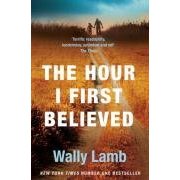
The hour I first believed

I have a lot of reading to do, following up on my time at the Summer Peacebuilding Institute, but I’ve just got stuck into a new novel, and I know I’m going to find it hard to put that down to read the textbooks that I have brought back with me. I had ordered it just before I left for the States, and as I start to read it, I’m struck by how much it fits with what I have been learning, centred as it is around one of the most traumatic events in recent years in the US.
Back Home

I’m back in England and glad to be home after 4 and a half weeks in the US and 3 weeks away from family. It was my fourth time in America, and it was great to experience again what is in many ways such a fantastic country. However, this time, I come back with more appreciation of England than I remember from previous visits. (Maybe it’s advancing age)!