A Prayer For This Day · Song for Today · World Affairs

I Pray We Not Fear

I’m posting today lyrics of a song by Bruce Cockburn. It’s from his latest album, ‘O Sun O Moon.’

I’ve been listening to this album non-stop since seeing him perform live at the Greenbelt Festival back in August.

It’s partly lament, but remembering also the good of which we are capable when we are at our best.

Truth, Justice, Mercy and Peace.

Us All

Here we are, faced with choice
Shutters and walls or open embrace
Like it or not, the human race
Is us all

History is what it is
Scars we inflict on each other don’t die
But slowly soak into the DNA
Of us all

Us all

I pray we not fear to love
I pray we be free of judgement and shame
Open the vein, let kindness rain
O’er us all

Us all
Us all

A Prayer For This Day · faith · Political · World Affairs

Caught up in this battle

On the weekend of October 7/8, we saw the beginning of a terrifying situation unfolding in Israel/Palestine.

Caught up in this battle between Hamas extremists and the state of Israel are ordinary Palestinian people.

Since 1948 their freedoms have been eroded. They live with many restrictions on their daily lives, and the state of Israel has gradually taken over their land and demolished their houses.

Somehow, the inequality of the situation must be recognised.

The reality of the injustice must not be overlooked or confused with what is now going on with the war.

Meanwhile, context is everything.

It’s understandable to focus in the immediate aftermath on the families who have lost love ones, and to condemn attacks on civilians of both sides.

But at some point news reporting must give the context of what has been happening in Palestine since 1917 and the favouritism shown to The state of Israel.

Church · faith · Grace · Greenbelt Festival,

An Oaty Bar With Raisins

I was in my Monday night discussion group this week, and we were catching up with Matt and Laura, who had been to the Greenbelt Festival for the first time. They had loved it, and had a particularly wonderful story to tell …

On the Sunday morning of Greenbelt, there’s a communion service which works by people gathering in groups of about 10, and collecting a bag which will have all you need for communion – some juice, bread and a napkin.

Matt and Laura were in a group without a bag – it seems they had all gone.

In a wonderful re-imagining of the feeding of the 5,000, someone in the group volunteered that they had an oaty bar that they were willing to share with the group.

So they passed it round and all took a piece of the oaty bar. To add to the delight of the whole situation, it turned out that the oaty bar had raisins in it, which meant that the wine was covered as well.

Well, how about that !

Activism · Songwriting

Born A Jew In Palestine

I thought I would have have go at writing a carol …

Here it is (I have another in the pipeline possibly)

Born a Jew in Palestine
Wise men see the stars align
Now it’s time for God to show his hand
In this chosen pain-filled land

Born when Herod was the king
He saw plots in everything
Thought to use the strong arm of his power
Didn’t know this was the hour

Jesus was a refugee
Threats of death forced them to flee
Lived under the force of Roman rule
While marching to a different tune

Born a Palestinian Jew
He comes to make all things new
Speaks the truth to all the powers that be
Here to set his people free

A babe was born in Palestine
Bethlehem in ‘89
Works for all this violence to cease
Reaches out the hand of peace

Born again in Palestine
Waiting for another sign
Now for God once more to show his hand
For this chosen, pain-filled land

Sep 7 2023
© jonathan Evans

Feel free to use the words if you credit me as author. I have set it to the tune of ‘Of the Father’s love begotten’ which works pretty well.

faith

It’s Amazing, But It’s True

So, about a week ago, I was thinking about some of the Nomad interviews that I’ve heard over the last few years, and I decided to listen again to one by Rowan Williams. (Becoming Natural N262)

I listened to the first part of it, and then got distracted. I’d just got back from the Greenbelt Festival where we had seen Bruce Cockburn, and I had his new album, ‘O Sun, O Moon’ on repeat. ‘Into the Now’ is currently my favourite track.

Anyway, this morning, I went for a run in Gloucester Park (trying to get back into some cardio exercise) and jumped back into the Rowan Williams interview. Some of what he was saying touched on the nature of God – to be free, not reactive but proactive, and to be the originator of diversity. As he talked about diversity, he used the example of a beam of light entering a prism and breaking up into different colours, the eternal light of God the Word coming throught the prism of creation and breaking up into all these brilliantly diverse realities, which is the world we’re in.

At the exact moment that he used this example, I saw, just to my right a marquee in rainbow colours. This weekend there are Pride celebrations in Gloucester and the park is being set up today for the event tomorrow.


Rowan Williams continued on the theme of diversity, and the various ways that human beings respond to the action of God. He used the example of pride, which we have often been taught is a bad thing – but it depends who you are talking about. It’s fine to say that pride is a bad thing if you are talking about Donald Trump (the example he used) but not so fine if you are talking about a schoolgirl inAfghanistan.

I suddenly had this memory of something similar happening … hearing someone talk about diversity, and seeing people dressed up for Pride celebrations …. then the penny dropped …

I had been listening to this very talk exactly one year ago, on the weekend of the Pride events in Gloucester Park.

It doesn’t surprise me any more, and in fact, I’m always looking out for it … to see God at work in the world around me and to remember that everything is connected.

Grace and peace.


Church · faith

For The People Of God

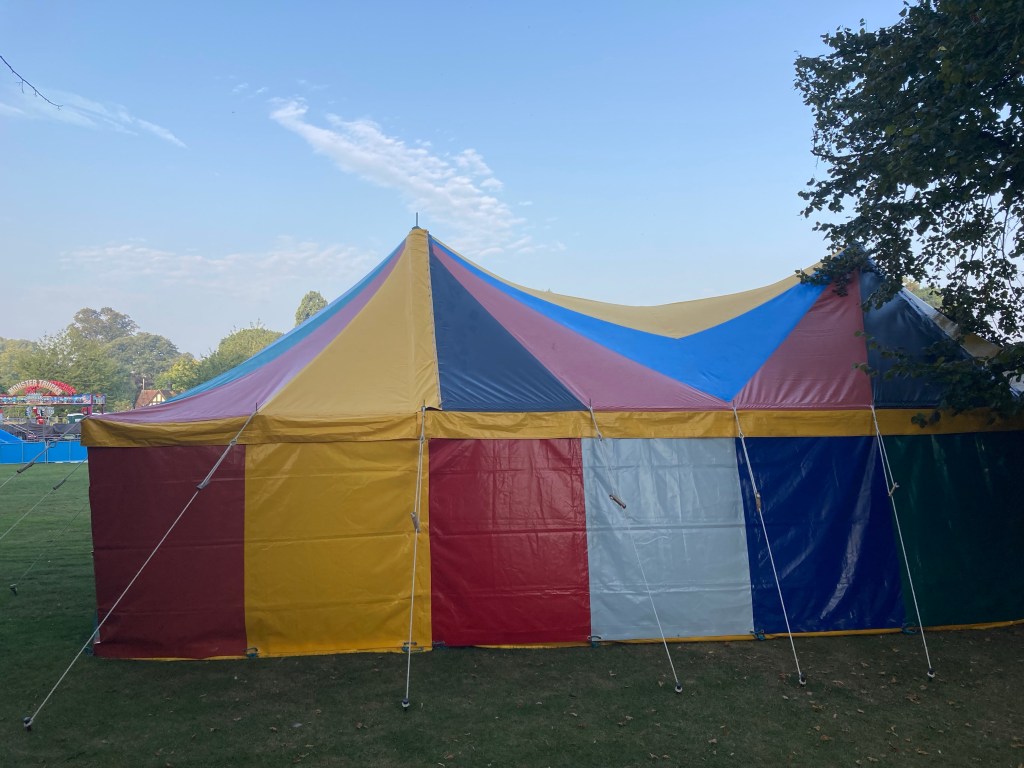
So, I was in my fortnightly zoom call with a group of friends thinking about triangles and circles.

Specifically, the triangle that is church (most of the time), with the top of the triangle being supported by the rest of the triangle, and the bottom of the triangle feeling the pressure of everything above it and not able to move.

Someone told me this week that there are seven steps in a church building to go up to the ‘far end.’  I had never come across that before, but it’s true that in most churches the ‘holy bit’ is separated from where the congregation are, and is reached by going up steps … and seven is one of those mystical numbers, so who knows ?

Any way, the point is, the leader in a congregation (and it will depend on what kind of church it is, Roman Catholic, Methodist, Free Church etc) is lifted up above the rest.

This symbolises the Holiness and otherness of God, I get that, but it also serves to emphasise the hierarchy in our churches.

Even in the Churches that meet in old Cinemas and Sports Halls there’s often some kind of platform to raise the leaders (and the band !) up above the rest.

Yes, it’s so we can all see the speaker.  

But …..

what if we were 30 people in a circle and not 100 seated in rows looking up at the one person leading.

Who’s the leader when we’re in a circle ?  No-one knows … And can you still see the one speaking ? (Yes)

So what about the circle that might be the church, where we’re all supporting each other and able to see and respond to each other.

It seems to me that the circle gives an opportunity for all sorts of things to happen

Diversity of contribution -share gifts we didn’t know we had
Acknowledge the power dynamics (which will still be there) rather than them being obvious but never addressed
Be a powerful political vision of a different kind of soceity
And in the context of Holy Communion/Eucharist/Mass/Lord’s Supper – have the potential to be the kind of crazy table where everyone gets fed.

Until next time

Grace and Peace
Bible · faith · Following Jesus

The Same Territory As Before

Matthew 19:23-30

Then Jesus said to his disciples, ‘Truly I tell you, it will be hard for a rich person to enter the kingdom of heaven. Again I tell you, it is easier for a camel to go through the eye of a needle than for someone who is rich to enter the kingdom of God.’ When the disciples heard this, they were greatly astounded and said, ‘Then who can be saved?’ But Jesus looked at them and said, ‘For mortals it is impossible, but for God all things are possible.’

This was the day when the Catholic Church remembered Mary Queen. One of Mary’s gifts to us is her example of pondering. We are encouraged to ponder today.

Once more we see Jesus challenging those with wealth and privilege. Until I/we/they see what it means to truly live out solidarity with the poor, I/we/they cannot enter the kingdom of heaven.

In the next few verses, Jesus will say that the first shall be last and the last shall be first.

It is the least and the lost and the last who are first in the kingdom of heaven.

The beginning of Luke’s Gospel introduces us to a young girl called Mary who is told that she will have a son and will name him Jesus …. (Luke 1:30)

She responds with a song of praise that includes the words … ‘He has cast down the mighty from their thrones and has lifted up the lowly’

Lord – Help us who have relative wealth and privilege to see more clearly and to follow more nearly the way of Jesus.

Bible · Following Jesus

Just One Thing You lack

Today – 21st August, I was thinking about this Gospel passage:
Matthew 19:16-22

Then someone came to him (Jesus) and said, ‘Teacher, what good deed must I do to have eternal life?’ And he said to him, ‘Why do you ask me about what is good? There is only one who is good. If you wish to enter into life, keep the commandments.’ He said to him, ‘Which ones?’ And Jesus said, ‘You shall not murder; You shall not commit adultery; You shall not steal; You shall not bear false witness; Honour your father and mother; also, You shall love your neighbour as yourself.’ The young man said to him, ‘I have kept all these; what do I still lack?’ Jesus said to him, ‘If you wish to be perfect, go, sell your possessions, and give the money to the poor, and you will have treasure in heaven; then come, follow me.’ When the young man heard this word, he went away grieving, for he had many possessions.

I use an app – Pray As You Go … and today there was a quote from Pope Pius X, whose feast day it is today:

“To heal the breach between the rich and the poor, it is necessary to distinguish between justice and charity.” Jesus asks the young man to heal his own breach, to move from the privilege of benefactor to the discomfort of needing others.”

To see the difference between justice and charity …

My situation is one of privilege. Like the person in the Gospel reading.

Inevitably, we read scripture from our own situation and experience, and the challenge of this passage is to begin to see things from a different viewpoint – that of the poor.

How can we truly experience solidarity with the poor ? Maybe only by being poor in some sense ourselves.

The person in today’s Gospel is prevented from seeing things from the viewpoint of the poor by his possessions.

What might be stopping me from this position of solidarity with the poor ?


Activism · Bible · Political

God Bless You With Discomfort

This Franciscan prayer was prayed at the end of a conference I attended recently at the Centre For The Study Of The Bible And Violence. See more here https://www.csbvbristol.org.uk/annual-conference-2023/

MAY GOD BLESS YOU with discomfort,
at easy answers, half-truths,
and superficial relationships
so that you may live
deep within your heart.

May God bless you with anger
at injustice, oppression,
and exploitation of people,
so that you may work for
justice, freedom and peace.

May God bless you with tears,
to shed for those who suffer pain,
rejection, hunger, and war,
so that you may reach out your hand
to comfort them and
to turn their pain to joy.

And may God bless you
with enough foolishness
to believe that you can
make a difference in the world,
so that you can do
what others claim cannot be done,
to bring justice and kindness
to all our children and the poor.

Amen

Activism · Bible · Following Jesus · Political

Let’s Catch Some Big Fish

This is a post about why Christ died. Just thought I would say that at the start. It will be followed by a post on Christ’s resurrection, as told by Mark in his gospel.

N.B. (Note carefully) What follows is not the whole story, but it is definitely an important part of the story that we have not taken seriously.

I must acknowledge the work of Ched Myers here as the inspiration for this post. I have heard him speak a few times, and most recently on the Nomad podcast just before Easter 2023, when he was asked the question – Why did Christ die ?

His answer comes at a time when I have been reading about the treatment of prisoners in Guantanamo, the Occupation of Palestinian land by Israeli settlers, and the misappropriation of water resources in the Land of The Holy One. The reason why Christ died turns out to be the same as the reason why any activist gets into trouble. They disturb the status quo.

We start by the sea of Galilee, as Mark recounts the calling of Jesus’ disciples. It’s told in typical Markan style, conveying urgency in a fast moving narrative. The disciples were fishermen. They worked in what might originally have been a self supporting economy, but an economy that had changed under Roman occupation. Fish was becoming big business, taking it away from the local to make big bucks – for example through the exporting of salted fish products. The beneficiaries of this would likely be the already rich and powerful, and not the fishing families.

So, when Jesus calls his first followers, saying ‘I will make you fish for people.’ It might not mean what I was taught as a child with the chorus – I will make you fishers of men, if you follow me, That understanding was to do with calling others to come and follow Jesus, and translated in my childhood mind to witnessing to others about Jesus. But that reading might be failing to take into account the economic and social environment of first century Galilee.

One reading of the Gospels is to see Jesus as a community organiser, kicking against a system of military, religious and economic power. Jesus consistently reaches out to the poor, and the sick, and those excluded from society for one reason or another.

So when he calls the disciples, he is saying – Come with me, and let’s catch some ‘big fish.’ Let’s take on the powers that are pressing you down and keeping you poor.

Does that resonate with you ? The idea that people with power will hold on to that power by controlling resources. In first century Galilee it was the fishing industry, while today, it’s likely to be oil or water.

How Israel uses water to control the West Bank.

The call of the disciples is just an example to remind us that Jesus is about neutralising the power of the elites for the benefit of the poor.

So, to cut a long story short (That long story is the Nomad podcast where Ched Myers outlines this much more fully), when we ask why Jesus died, the answer must be understood within the setting of the whole of the gospel account.

That account shows us a Jesus who is consistently a thorn in the side of the authorities, both religious leaders and Roman Imperial power. The conflict with the religious leaders is clear in the many encounters that Jesus has with the ‘Scribes and Pharisees.’ How Jesus relates to Roman Imperial power is less clear, but several important signs show us this thread running through the gospel.

When Jesus talk about the ‘Kingdom of God,’ or the ‘Kingdom of heaven,’ it is set against the Empire of Rome
When Jesus talks about peace, it can be seen in contrast to the ‘Pax Romana,’
The word for gospel in Greek – euangeliuon, was used by both Greece and Rome to announce history making victories.
When Jesus is called ‘Lord’ it is in contrast to saying ‘Caesar is Lord.’ All of these phrases, used in the Gospels, are like slogans on banners in a protest march.

So there’s this background in the gospel account of Jesus calling people to a new way of living that would challenge the economic, religious and military powers of the day.

No wonder then that he was crucified. This is what happens when people challenge the powers enough to make them afraid.

And who is responsible for the death of Jesus ? Is it the Jewish authorities, or Rome. There’s certainly a case for the Jewish leaders to be the prime suspects, but Rome is also in the frame.

There’s a complicated mix of power with Rome the absolute authority, and Jewish leaders essentially collaborating with Rome to keep their influence. It was convenient for the Roman powers that the Jewish leaders wanted Jesus out of the way, and in the end it was a Roman execution by crucifixion to warn other would be activists that you took on Rome at your peril.

Sadly, over the centuries, the church has ignored this political aspect of the death of Jesus, and largely understood it in the context of a personal salvation from sin.

In his little book – ‘Meeting God in Mark’ (page 62), Rowan Williams writes this – thinking about the words of Jesus to his disciples when they are talking about who is the greatest of them – ‘Jesus is saying that his execution is the price that is paid to free us all from the fantasy that God’s power is just like ours, only a hugely inflated version … it uproots the notion that whatever power we attain must be valued and clung to at all costs … … in this lethal error lies all the roots of our sin and self inflicted misery … the death of Jesus delivers us, dismantling the myth of power that hold us prisoner.’

Unfortunately, over the centuries, and particularly in the last 80 years or so, the loudest voices have told us that the death of Jesus is about God dealing with the sin of the world by sending Jesus to die on our behalf, and take the punishment that should have been ours.

There is language like that in the New Testament, but there are many other images that try to ‘explain’ the cross. It is important to grapple with those ways of understanding the cross, because it is not just about someone being martyred for opposing the powers. The New Testament is clear – something to do with the story of God and humanity is being played out here. There is a deeper message to hear, (More of that another time).

The trouble is that what we call Theories of The Atonement are not the same as simply telling the story of what happened as a human story of what happens when power is threatened by someone who shows us a different way to live.

This way of seeing the Jesus story is important for the church in the world today. This reading of the Gospel leads us to think about the call to challenge power when we see it being used to corrupt and oppress. In that way, maybe the world will see one of the ways that the message of Jesus can speak powerfully today.

Grace and Peace