Bible · faith · God · Theology

We Know Only In Part …

… but we’re getting there.

Rob Bell “I’m going to try and create a space where hope is the most rational response to the world …
I love that thought, and basically I’m with it, but it didn’t seem like that on the first Good Friday.

Today is Good Friday – Friday April 2nd 2021

One of my readings for today was from lamentations:
I am one who has seen affliction
    under the rod of God’s wrath;
he has driven and brought me
    into darkness without any light;
against me alone he turns his hand,
    again and again, all day long.

This is the cry of desolation at the laying waste of Jerusalem and the destruction of the temple. It’s a place of no hope. It is echoed in the cry of Jesus on the cross – ‘My God, why have you forsaken me ?’

No hope.

Also in my readings for today was psalm 95. A strange psalm it seemed to me.
But in the middle of the psalm, these words are addressed to God’s people:

O that today you would listen to his voice!
    Do not harden your hearts, as at Meribah,
    as on the day at Massah in the wilderness,
when your ancestors tested me,
    and put me to the proof, though they had seen my work.

In verse 9, I saw something that resonated with me to do with what happened on that first Good Friday.

The Old Testament is full of God’s faithfulness, in the face of Israel’s unfaithfulness.
It’s as though all the way through, Israel are pushing God to see how far God will go. In spite of the work of God in liberating Israel from slavery, they forget, and abandon the love they have had for God. Is there a point at which God will say – ‘That’s it! I’ve had enough of you people.’

In fact, it does appear at times as though God does say exactly that. But then something happens, and God’s faithfulness reappears, just as the sun reappears from behind clouds.

And today, Good Friday, is a day when it seems like the human race is testing God again. ‘They put me to the proof, though they had seen my work.’
In spite of all that Jesus has said and done, he is now rejected. In Jesus, the world has witnessed the works and character of God revealed in Jesus in a new way, and yet still people put God to the test. Jesus is pushed to see how far his love will go. The soldiers around the cross shout – ‘If you are the King of the Jews, save yourself!’ This is a challenge to see how far God’s love will go.

Sam Wells talks about the cross in this way:
The cross is the moment when Jesus had to choose being with the Father, or with us, and he chooses us.  And at the same time, the Father has to choose between letting the Son be with us, or keeping the Son to himself. Such is God’s commitment to us that chooses to let the Son be with us. 

This is the faithfulness of God in the face of human unfaithfulness.

Sam Wells again (paraphrased) talking about Easter day:
This day. this Easter day, this wondrous, glorious, blessed, fabulous day is the greatest day in the history of the universe. It tells us that however deeply we reject God, whatever we throw at God, God will find a way back to us in resurrection.  And – this resurrected, real flesh and blood body of Jesus, tells us that we too can have that life – and that our eternal destiny is to be with God, as God is, and always has been, with us. 

Now that is hope ! Thanks be to God.

Grace and peace.

Activism · Bible · faith · Following Jesus · Jesus · Political · World Affairs

In My Dream I Saw

I don’t remember my dreams very often, but I still have some snippets from a dream I had last night.
In my dream I saw a statue, standing up with something like a rod in its hand. The statue was a bit more than life size, maybe about 8 feet tall, and the rod was about 18 inches long and maybe 2 inches in diameter.

The next thing I saw was that the statue was lying down on its side, and the rod was held by two cupped hands of the statue. The hands were holding, rather than gripping the rod. Then someone was removing the rod from the cupped hands.

Then I found myself with a group of people in a room, all giving their different accounts of what the rod symbolised. Each one was describing a different angle on power

I can’t quite remember exactly what I said, but it was something to do with what happens when there’s a vacuum. There’s that saying – nature abhors a vacuum. When there’s a vacuum, something will rush in the fill that vacuum.

In the dream, the vacuum was created when the rod was removed from the hands. Suddenly, the person, or organisation that was holding the power is no longer in charge. At that point, other forces are quick to come and seize power.

In my dream, I went on to say that what was needed was an understanding of what the purpose of holding that power should be. The power should be exercised for the benefit of all. That means that everyone needs to have a say, no one should be left out.

At that point, I finished, and everyone applauded. I was surprised, but pleased that what I had said seemed to ring a bell with everyone present.

Here endeth the dream

So – a couple of reflections on the dream. We’re watching a series on Netflix at the moment called Godless. It’s set just after the American Civil war, and I think that may have been on my mind, and that somewhere deep in my unconscious is a memory of Abraham Lincoln’s Gettysburg Address from November 19th 1863, in the middle of the Amercian Civil War. In that speech, he famously said ‘That government of the people, by the people, for the people, shall not perish from the earth.’ The exact wording of the speech is uncertain, and Lincoln wasn’t the first to use that idea …. of the people, by the people, for the people.

My little speech in the dream seemed to be along the same lines …

The second thought is that today – March 28th 2021 – is Palm Sunday in the Christian calendar. The Gospel reading for Palm Sunday recalls how Jesus rode into Jerusalem on a donkey. As he entered the Holy City, the crowds acclaimed him as king shouting – ‘Hosanna to the Son of David.’ Hosanna means ‘save,’ and is probably used here as a special cry of joy for the one who has come to save, to rescue.

Here’s the prophetic passage from the First Testament book of Zechariah that is clearly seen in the events of Jesus’ entry into Jerusalem.

Zechariah chapter 9 verses 9 – 10.
Rejoice greatly, Daughter Zion! Shout, Daughter Jerusalem! See, your king comes to you,righteous and victorious,lowly and riding on a donkey,on a colt, the foal of a donkey. 10 I will take away the chariots from Ephraim and the warhorses from Jerusalem,and the battle bow will be broken. He will proclaim peace to the nations.His rule will extend from sea to seaand from the River to the ends of the earth.

In my dream, someone came and took the rod representing power from the statue. Whatever part of my subconscious that dream came from, the removal of the rod of power is something to do with a non-violent expression of a different quality of power to the oppressive displays of power that dominate our world.

For example, I’m thinking today of the non-violent demonstrations in Myanmar at the brute force and violence shown by the army.

I’m thinking of the non-violent demonstrations in our own city of Bristol, sadly hijacked by violent protesters.

I’m thinking of the peaceful protests against violence done to women after the murder of Sarah Everard, that ironically resulted in a police over reaction and more violence shown to the mostly women protesters.

I’m thinking of the peaceful civil disobedience of the protests of Extinction Rebellion back in 2019.

And I’m thinking of Jesus, riding into Jerusalem on a donkey, not a war horse, to announce God’s kingdom of peace. Jesus comes to demonstrate his power, that is so different to the power of the elite in Jerusalem, and to the imperial might of Rome. He comes to challenge the powers of his day. From the backwater of Galilee, Jesus now enters as it were, the Lion’s Den.

As I imagine the picture of Jesus on a donkey, I see that event as an act of non-violent resistance. The words of the ancient prophets are brought to life, and their words still speak today.

The words of Zechariah conjure up a vision not far from my dream in which I saw the symbol of power taken from the statue – I will take away the chariots from Ephraim and the warhorses from Jerusalem,and the battle bow will be broken.

It is a vision of peace that comes against all kinds of oppression – through the economy, through race, gender and sexuality.
Wherever such protests are made, the forces of power will rise to try and silence the voices of peace.

A prayer for today

God of ancient prophets, we thank you for your timeless utterances of truthfulness. Give us good ears to hear the reverberation of those old words as new voices ring out in our day. In his name. Amen.

Prayer by Walter Brueggemann (slightly altered)

Bible · Church · faith · Following Jesus · Jesus · Theology

New Light On St Paul

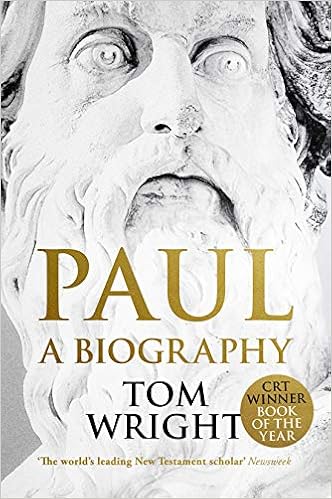
OK. It’s been a while. I’ve had so many ideas but never got round to getting it down. Here’s a few thoughts from Tom Wright, otherwise known as N.T. Wright. He was Bishop of Durham for a while, but is best known as an academic whose whole adult life has been spent studying the life and writings of St Paul.

He wrote a book about the life of St Paul that came out three years ago. I haven’t read it, but heard him talk about it on the Nomad Podacst.

To start with, his name is originally Saul. He comes from a conservative tradition in Judaism, and as the book of Acts describes, will do anything to protect Judaism from what he sees as unhealthy, misguided influences. One of those ‘way out’ movements is of course, what he would see as the cult of Jesus. Saul is basically a fundamentalist, and will track down followers of Jesus, and condone killing them for the cause of religious purity. Hence the stoning of Stephen, one of the prominent members of what we would call the early church. Saul is at this point a violent man, determined to put a stop to this abberation of the faith that he treasures.

But to call it the early church is slightly misleading – at this early point in the evolution of the Jesus movement, we’re talking about a community that is mostly made up of Jews before the word Christian has even been uttered. When we read the word ‘church’ in our English translations, the original Greek word is better translated by ‘gathering,’ ‘assembly, ‘ or ‘company.’

Tom Wright reminds us how important it is to understand the first century context of the words that we read. Another example of where we might have been reading this wrongly is to do with what we might have called the ‘conversion’ of Saul. Growing up, I had the impression that on the road to Damascus, when Saul has his experience of Jesus, it is at that point that he ‘becomes a Christian.’
(You can read the account in Acts chapter 9)

But at that point in time, there was no such thing as a Christian. There was no separate religion called Christianity. Saul was a Jew who had such a profound and mystical experience of the risen Christ, that he suddenly sees that he has been mistaken, and that Jesus is in fact, the Messiah of God. He doesn’t stop being a faithful Jew, and would in all likelihood continue in exactly the same way as he had done before regarding his religious observance, but now seeing that the promised Messiah has in fact come – in the person of Jesus Christ.

After this life changing encounter, at some point early on, Saul disappears off to Arabia for three years. It’s not clear exactly where he went or what he did during these three years, but Tom Wright has a theory … first a bit of background:

Back in the First Testament, * the prophet Elijah is at a turning point in his life. He had just defeated the 400 prophets of Baal, and was on the run from king Ahab and his wife Jezebel. At this time of great stress in his life, where does he go ? To mount Horeb. Mount Horeb is essentially the same as Mount Sinai, where Moses received the Ten Commandments. So Elijah is going back to the place where it all started. The place where God made it clear that the children of Israel were a ‘set apart people.’ They had a call to be God’s people for the nations. At Mount Horeb, God meets with Elijah and he gets the commissioning and strength that he needs for the next phase in his ministry. God tells Elijah that he is to ‘Go back the way you came, to Damascus.’ Once there, he was to anoint Jehu as the new king of Israel.

Tom Wright’s theory is that Arabia was the region that included Mount Sinai. Where would Saul go to think through the experience that he had on the road to Damascus ? Maybe back to where it all started – to Mount Sinai. Saul’s roots are in the ancient story of Israel’s deliverance from slavery; the journeying through the wilderness; the call to live as the people of God. So Saul goes to Sinai, to learn what this new call to follow Jesus will mean. And at the end of those three years, where does he go ? Back the way he came, to Damascus. And once there he will share the news that a new king has been anointed – Jesus. And that this good news of Jesus is for all people, both Jew and Greek, men and women, slave and free. And that this new community will be different from any community previously known, because it will not be according to your ethnic group, or whether you were a man or a woman, or a slave or a free person. This new community will break all the rules and be for all.

I feel like I should read the book !

And, as I was pondering on this alternative, radical new community that we see in the book of Acts, it made me think about my own experience of the church, and to what extent the churches I have been a part of have been ethnically diverse, with men and women both accepted fully, with class, background, education and social status not being an issue. Sadly, it seems that churches by default become fairly monocultural, not at all the vision that Paul had … 2000 years later it’s still a work in progress. Additionally, there are movements within the church that see the growth of the church being most effective when this mono approach is used – because like attracts like. This is in sharp contrast to the kingdom vision of a diverse community, which although it is often a more challenging environment, has within it the possibility of fully enacting the principles of love. Such a Christian community is truly a thing of great beauty.

* Christians have generally called the first part of the Bible ‘The Old Testament.’ But there are dangers in that. It might lead us to think that we can leave all of that behind. Now we have the New, we don’t need the Old. The New Testament gives us everything we need. In a sense that is true, but we are greatly impoverished in our undertanding of Jesus if we do not understand his roots, which lie in the work of God through Israel. If we only know the New Testament, we don’t know the New Testament! There is so much richness in the books of Moses, the history books, the wisdom and the prophets that we need to attend to. There has been a move to call these writings ‘The Hebrew Bible,’ but others are more inclined to use the phrase ‘First Testament,’ which gives those writings a more exalted place than ‘Old Testament,’ and unlike the phrase Hebrew Bible gives them their righful place within the whole revelation of God’s love and purposes.

Grace and Peace

Bible · Following Jesus · Political · World Affairs

There Is None So Blind

A lyric from an old song “Everything is Beautiful” by Ray Stevens goes like this “there is none so blind, as those who will not see.”
In this form of a proverb, it might date back to 1546, but it probably has its roots in the Bible.

I was reading in John Gospel chapter 9 this morning. It’s the account of the healing of a man born blind. Now, because it happened on the Sabbath, when it was against the Jewish Law to work, an argument follows the healing – if Jesus was really from God, would he have done such an outrageous thing ?

As well as the physical healing, which enabled the man to see for the first time, there’s also the question of a different kind of seeing, which is to do with seeing the truth about how things really are, and making an appropriate response.

One of Jesus’ claims is to be ‘The Light of the World,’ which is about revealing how things really are. Enabling people to ‘see.’
The religious leaders take exception to this claim, and ask Jesus …. ‘Are you saying that we’re blind ?’

Some of the Pharisees near him heard this and said to him, ‘Surely we are not blind, are we?’ (John 9:40)

Jesus’ response is perhaps surprising:

41 Jesus said to them, ‘If you were blind, you would not have sin. But now that you say, “We see”, your sin remains. (John 9:41)

What he is saying in essence is this: they are not blind – they can see perfectly well. ‘If they were blind, they would have an excuse for not seeing the evidence of Jesus’ power. They are guilty because they have seen, and should have known better than to refuse the power of God.’ *
* Walter Brueggemann in ‘Gift and Task’ a year of daily readings and reflections.

In the Gospel, the religious leaders are more interested in preserving the status quo, and their position of influence. Jesus is a big threat to that power.

It made me think of current situations where people in power might see quite clearly where there is a need for change, but that change would threaten to take away their influence, so they hold on to their power. They should know better.

As always, the challenge is there for me too. Where should I know better ?

Art and Design · Bible · Church · Creativity, · Theology

Business As Usual ? Or Not ?

This morning, my daily prayer included these readings:
Genesis 13:2-18; Galatains 2:1-10 31 and Mark 7:31-37

The Genesis reading was about Abram and Lot (Genesis 13). At this point in the story, they both have considerable wealth – camels, sheep, goats etc. They realise that they it’s no longer sustainable for them to stay together. Their herders are beginning to fall out over where to graze their flocks, and they need more land.

So Abram decides that to avoid trouble, they must separate. By rights, Abram should have had the choice of where to go, and you might expect him to choose the best land. But he doesn’t. He gives Lot the choice, and Lot chooses the well watered plain of the river Jordan.

Abram’s generosity is rewarded as in the following verses we hear God reaffirming his promise to Abram, that his descendents will be numerous: “Go, walk through the length and breadth of the land, for I am giving it to you.”

What you might expect to happen (Abram having the choice, and getting the best land) doesn’t.

Skip to my next reading today, from the New Testament book of Paul’s letter to the Galatians. Paul is sharing his story with church leaders in Jerusalem – how he has been working with the non Jewish believers. The idea that Gentiles could become a full part of the early (Mainly Jewish) church without being circumcised was a new thing. Yet the leaders in Jerusalem have eventually reached a point of accepting Gentiles without requiring circumcision.

What you might expect to happen (circumcision) doesn’t.

And finally, in Mark’s Gospel chapter 7, we read of the healing of a deaf and dumb man. Ordinarily, the man would have been deaf for the rest of his life.

What you might expect to happen doesn’t.

God’s way of working is often to challenge what we would normally expect, and do something different.

Link to …. Creativity

For the last three Thursdays, I have been attending a webinar – Just Imagine. Four sessions on creativity. Last night’s session was about the role of play in creativity. Questioning what things are usually designed to do, and playfully imagining something different.

All too often we live according to norms and recipes with known outcomes. Playfulness challenges this with no fixed outcomes in mind. This approach to creativity often starts with a question … ‘What if …’

Maybe God was playful in creation … ‘What if we had cows as well as galaxies ?’

One of the ideas I was especially fascinated by was from architect Steve Collins, who wondered …What if churches were like dark kitchens, which are based on a delivery only model. So unlike a take away, there’s no contact directly with the customer. Getting food out to the customer has never been easier.

The ‘What if ?’ question may not lead immediately to a workable solution, but it’s likely that many of the great ideas have sprung from such questioning.

And going back to play being part of God’s nature, we wondered how good our churches are at play ?

Part of the play process might be to start with two apparently disconnected ideas, and then play around with them and see where that leads. Candlesticks and Electric Scooters – I wonder where that would go ? Off the top of my head, I can’t think of anything ??!!

So, I’m thinking now about the first part of this post – about God doing things that are unexpected, and the idea of asking ‘What if … ‘ Mmhhhh …. think on.

Grace and peace


Bible · faith · God · Political · Theology · World Affairs

The Pernicious Influence of Globalisation

The Old Testament story of the Tower of Babel is pretty well known. It’s a curious tale that appears after the flood story. Here’s the text from Genesis 11.

Now the whole earth had one language and the same words.
And as they migrated from the east, they came upon a plain in the land of Shinar and settled there.
And they said to one another, ‘Come, let us make bricks, and burn them thoroughly.’ And they had brick for stone, and bitumen for mortar.
Then they said, ‘Come, let us build ourselves a city, and a tower with its top in the heavens, and let us make a name for ourselves; otherwise we shall be scattered abroad upon the face of the whole earth.’
The Lord came down to see the city and the tower, which mortals had built.
And the Lord said, ‘Look, they are one people, and they have all one language; and this is only the beginning of what they will do; nothing that they propose to do will now be impossible for them.
Come, let us go down, and confuse their language there, so that they will not understand one another’s speech.’
So the Lord scattered them abroad from there over the face of all the earth, and they left off building the city.
Therefore it was called Babel, because there the Lord confused the language of all the earth; and from there the Lord scattered them abroad over the face of all the earth.

The motivation for building the tower seems to be twofold:
a desire to be known as the best, and to do the impossible.
coupled with a fear that without power and fame, the people (whoever they were, we don’t know), would be dispersed, and thus lose their influence.

Walter Brueggemann puts it like this: ‘the story … is an early account of globalisation, a strategy of universal control by powerful people who aim to control all the money and to impose uniformity on all parts of the world population.’

The force behind such attempts for domination is so powerful that it is all consuming, stopping at nothing to be at the top. The consequence of this kind of behaviour, althought not explicitly stated in the Genesis account, is that the poor and the powerless are overlooked.

Walter Brueggemann again … ‘The scattering and confusion wrought by God is to assure that no assertive power can gain ultimate control and emerge as a single superpower.’

Fast forward to the 21st century. Where are the parallels today for empire building to achieve complete control.
The super companies – Microsoft, Google, Apple, Facebook etc (and probably some others that have the same degree of power but work behind the scenes).
The super powers – at this time notably China, while the USA decreases in its influence.

And where would we look to see God’s hand in all of this ? Is there a move of God today that will assure that no assertive power can gain ultimate control ?

Grace and Peace.


Bible · Church · community · faith · Following Jesus

It Never Struck Me Before

So. I’ve been listening to an interview with Alexander John Shaia. Fascinating. I had not heard of him before. He’s interviewed here on the Nomad podcast, and also in Rob Bell’s Robcast.
There are a load of things to talk about, but just an aside to start with – he talks about the Passover meal, and the central theme being slavery and freedom. It never occurred to me before that they wouldn’t all have gone with Moses!! Some would have followed him, for sure, but there would have been those who thought that they were better off staying in Egypt. They made that choice.

Now why didn’t I realise that ? I just assumed they all went. But of course some would have found the idea of such a radical move to be too difficult.

So on to where this is going to lead – to four questions that map the road of transformation.
I’m just going to try and summarise what Alexander was saying, but I hope you might go and listen to the interview, because I found it mind blowing.

We need to begin with a Jewish Passover:
According to the Ashkenazi tradition, the order of the Four Questions at the Passover meal is as followed:
Question 1: Why on all other nights do we eat either leavened bread or matza, but on this night only matza?
Question 2: Why on all other nights do we eat different types of vegetables, but on this night only bitter herbs?
Question 3: Why on all other nights do we not dip our food once, but on this night we dip it twice?
Question 4: Why on all nights do we eat either sitting upright or reclining, but on this night we recline?

These questions traditionally bring to mind:
Question 1: Eating matza commemorates how the Jews were in such a hurry to leave Egypt they could not wait for their bread to rise.
Question 2: Eating bitter herbs represents the bitter difficulties of life as a slave in Egypt.
Queston 3: Dipping food was a luxury reserved only for the aristocracy and upperclass in ancient times, so the practice of dipping is meant to reflect freedom.
Question 4: Reclining while dining was also a luxurious behavior historically, which stresses the privilege of freedom.

But Alexander Shaia refers to an older practice in Judaism at the time of Jesus that has four similar, but different questions, that might be paraphrased as:
Question 1: Thinking about the Exodus, when God’s people were set free from salvery in Egypt … Where in your life are you lost in a place of emotional paralysis, a state of being unfree, enslaved ?
Question 2: Thinking about the forty years when God’s people wandered in the wilderness … Where are you in a death experience ?
Queston 3: Thinking about the time when God’s people crossed over Jordan into the promised land … Where do you hear God’s new promise for you ?
Question 4: Thinking about life in that land of promise … What new action is God asking of you, for your life, the life of your community ?

So … in summary, the four questions relate to
1. The path of transformation includes times to consider making a change. How are are you going to respond ? Choice
2. The path of transformation will involve tension, and trials. Suffering
3. The path of transformation will include the offer of newness in some way. Gift
4. The path of transformation will challenge you to think about acts of service you are being called to give. Service

Interestingly, these four aspects of the life of faith were a central part of the practice of the early church in preparing candidates for baptism. Not surpisingly really, the church drew on the heritage of Jewish practice in making disciples of Jesus Christ.

Now here’s the thing … the early church also, according to Alexander Shia and others, linked these four aspects of discipleship to the four Gospels.
Matthew – addressed to the Jewish community – Choice.
Who will you choose ? Will you choose this new way in following Jesus ?
Mark – addressed to the Christian community in Rome, suffering persecution under Nero.
Stay strong as you seek to make Jesus the Lord of your life, even in the midst of persecution. Suffering.
John – addressed to the diverse Christian community in Ephesus, which was beginning to revisit old divisions
Even though you come from different backgrounds. Receive the gift of unity. Gift
Luke – addressed to the Christian community in Antioch.
Remember that you are called to serve. Service

So, when you think of the Gospels, think rather of one Gospel. The Gospel that is shown to us in four different ways, to help us understand the fourfold path of transformation.

I found these insights really helpful, and will be praying that I will be aware when I am being asked to make a choice about something –
The challenge of moving on to something new, and leaving other things behind.
The challenge of hanging in there when it gets tough
The challenge of seeing how I am being called to serve.

Grace and peace.

Bible · community · faith · Following Jesus · Theology

Steadfast Love aka Transformative Solidarity

Be mindful of your mercy, O Lord, and of your steadfast love, for they have been from of old.
Psalm 25 verse 6, New Revised Standard version

I’m using a little book by Old Testament scholar Walter Brueggemann during Advent – Celebrating Abundance. In today’s reading Walter Brueggemann talks about ‘Solidarity in need, acted with transformative strength.’ It’s his way of understanding the phrase so often repeated in the Old Testament – steadfast love.

He writes – ‘What human persons and human community most need is abiding, committed, passionate transformative solidarity.’

I see this as being very much in harmony with another theologian – Sam Wells – who talks about the greatest challenge facing us today being that of isolation.

Walter again – ‘The path is to love neighbour, to love neighbour face-to-face, to love neighbour in community action, to love neighbour in systemic arrangement, in imaginative policies.’

Let’s do it!

Grace and peace.

Bible · faith · Following Jesus · Grace · World Affairs

On That Day This Song

I’m preaching at our Thursday Communion Tomorrow.
Here are my thoughts on Isaiah 26:1-6 and Matthew 7:21 &24-27

Isaiah 26:1-6
On that day this song will be sung in the land of Judah:
We have a strong city; he sets up victory like walls and bulwarks.
Open the gates, so that the righteous nation that keeps faith may enter in.
Those of steadfast mind you keep in peace – in peace because they trust in you.
Trust in the Lord forever, for in the Lord God you have an everlasting rock.
For he has brought low the inhabitants of the height; the lofty city he lays low.  He lays it low to the ground, casts it to the dust.
The foot tramples it, the feet of the poor, the steps of the needy.

Matthew 7:21 &24-27
21 ‘Not everyone who says to me, “Lord, Lord”, will enter the kingdom of heaven, but only one who does the will of my Father in heaven. 
24 ‘Everyone then who hears these words of mine and acts on them will be like a wise man who built his house on rock. 25 The rain fell, the floods came, and the winds blew and beat on that house, but it did not fall, because it had been founded on rock. 26 And everyone who hears these words of mine and does not act on them will be like a foolish man who built his house on sand. 27 The rain fell, and the floods came, and the winds blew and beat against that house, and it fell—and great was its fall!’

I remember a period of time when I was preaching every week that it seemed as though every sermon had the same theme – death and resurrection. I just couldn’t escape it. And I have that same feeling as I am sharing these thoughts today. The verse that struck me in today’s readings was that first verse in the Isaiah reading – ‘On that day this song will be sung …’

Isaiah is looking with the eye of faith to a day when God will restore his people. When there will be singing and rejoicing as they return from exile to the holy city Jerusalem. That return will come after years of tension. On the one hand there has been the unfaithfulness and disobedience of Israel and on the other hand the faithfulness of God, who at times allowed them to be punished, but always within the bigger scope of his faithful love for them.  

We’re watching a prison drama on T.V. at the moment.  The governor of the prison is trying to bring in reforms, to make the prison a place of restoration rather than punishment.  However, at times, she has to act in response to inmates who break rules in ways that just can’t be ignored.  She has to take away privileges partly as a message to the prison inmates, and sometimes for their safety.

The events in Isaiah’s time seem rather like that.  There are times when God has to take away privileges because of Israel’s failure to live well – that part of the story ends in the disaster of God’s people being carried from their homeland into exile. But the underlying story is one of restoration.  The hope that is always extended by God is that transformation can happen.  That a nation – Israel – that has lost its way can come back from the brink and be restored.  The whole of Isaiah is about the possibility of something new.

Our world is living through such a time of tension now.  Whereas it’s usually the poorest that suffer through drought, famine and war, the pandemic has had a much wider impact, affecting those who live in the relatively wealthy nations. Many have died, or been bereaved, or are living with long term effects of Covid; others have had their livelihoods threatened or taken from them.  All of us have experienced the removal of privileges – We have not been able to see family, to socialise, to enjoy sport and entertainment, to eat out and so on … without putting up with severe restrictions.

And as we go through these difficult times, things have been brought to the surface.  In the first lockdown, the need to tackle climate change was brought to the fore as we heard of cleaner air as there were fewer carbon emissions at that tine; the need to tackle poverty at home was apparent as we became more aware of the impact on many of losing jobs and needing food banks as well as government support to put food on the table.  The need for a new economic order is clear as we see the major threat now to a whole range of sectors – hospitality, entertainment, leisure, shopping – and it’s not clear what life will look like when we emerge from the crisis.  

So where is God in all this ? And if God is doing a new thing at this time, what might that new thing look like ? 

I suggest that we are more used to asking those kind of questions for ourselves personally than for issues that impact us globally.  In our day to day life of faith we look to God as we pray for those we know in need; we look to God for direction and help in our lives and our decision making. But we are now confronted with something new that affects us all.  

So How will we respond ?

I think the question I’m asking is this:
Is it all just down to the human race to make the best of this situation that we can ?  
Or is God involved in national and global events, as well in our own personal lives ? 
In other words, is God God of the macro as well as the micro ?

In reading Isaiah, it seems abundantly clear that God is involved in both the personal and the national, and if anything Isaiah even more concerned with the way that God addresses and deals with the community of Israel than he is with the individual.  In an individualistic society like ours we may find that hard to take, but there it is.

So back to where I started, with death and resurrection.  It’s the heart of Christian faith and also the faith of Israel as they go through the death of exile and the resurrection of return. We are going through it just now … and yes, we need resources to do that, but we will also need to look for resurrection, and the new thing that God will do.
God’s resurrection promise to Israel in Isaiah’s time is a coming together of God’s steadfast love and a renewed people – see in verse 2 “Open the gates, so that the righteous nation that keeps faith may enter in.”

The two go together – God’s steadfast love and faithfulness and a response of godly living.  That’s why, at the end of the sermon on the mount, which started with God’s grace – ‘Blessed are those who know their need of God, for theirs is the kingdom of heaven” … we hear Jesus challenging us to respond to that grace – to be those who not only hear the words of Jesus, but act on them.

So in the midst of a pandemic, what does that look like ?  
It doesn’t mean thinking we can save the world – that it is our responsibility to put everything right. But it does mean cultivating ways of living, habits that enable us to play our part. And as we nurture these holy habits, to be looking for signs of the new thing that God will do.

I love to tell the story of pilot Chesley Sullenberger, so brilliantly told in the film ‘Sully’. In the film Ches is piloting a plane which has just taken off from La Guardia airport. The plane is hit by a flock of birds and the engines disabled. Knowing both engines are not functioning, he makes a deicision not to try and get to an airport, but to land the plane on the Hudson river, which he does, with no loss of life. 

A subsequent investigation suggests that he made the wrong decision and that he could have landed safely at La Guardia or Teterboro airports. His whole professional reputation is on the line and it’s only when they run a simulation that faithfully recreates the situation in real time that he is proved to be right. 

If he had tried to get to an airport, it would have been certain disaster. It is his years of flying that enables him – in just 35 seconds – to make the right decision, almost by instinct. Everyone called him a hero, but his reponse was “I’m not a hero, I’ve been rehearsing for this.”   It is similarly the disciplines of faithful godly living that will help the Christian ‘rehearse’ so as to make the right ethical decisions in the heat of the moment.

Developing habits of generosity, honesty, kindness, faithfulness, listening … habits that will help us build healthy relationships and sow the seeds of grace in that part of God’s mission field where he has placed us.  Hear these words of Jesus in Eugene Peterson’s translation at the end of Matthew chapter 11 

“Walk with me and work with me—watch how I do it. Learn the unforced rhythms of grace. I won’t lay anything heavy or ill-fitting on you. Keep company with me and you’ll learn to live freely and lightly.”  May you know that confidence in God at work in you day by day.  Amen.

Prayers

On that day …

With the eye of faith we look forward to see – 
On that day – There will be equality between black and white, and between shia and sunni.
On that day the wall between Israel and Palestine will be torn down and the children of Abraham will live in peace.
On that day people will no longer want more power and more stuff, but will be eager to share what they have.

On that day there will be no poor among us, but all will have enough to live and enough to give.
On that day weapons of violence will be transformed – bombs will be defused, and guns will be a thing of the past.
On that day the earth will begin to recover; forests that were laid bare will grow green again.  Waters that were polluted will once more be clear; 

On that day songs of joy will be sung instead of lament.
On that day families who have fallen out with each other and not spoken for years will decide to pick up the telephone.
On that day the last food bank will close; 

On that day protestants and catholics will worship side by side, and embrace each other as brothers and sisters.
On that day … on that day, those who mourn will be comforted, fear will be replaced by trust, hate will collapse in on itself
On that day the power of love will break the vicious cycles of fear and greed and hate.

On that day, on that day. Lord bring that day we pray, bring that day.

We pray – God of love and suffering power, speak again your word of transformation in the midst of our weary world. We so easlity give in to despair, to numb acceptance of the old order of things.  Kindle in us a passion for the new thing that you would do – in us, and by your grace, through us. Amen

(From Celebrating Abudance. Reflections for Advent by Walter Brueggemann)
Bible · Church · faith · Following Jesus · Worship

The End Of A Year

I’ve been thinking about annual cycles of religious festivals – For Christians, the church year goes like this: Advent – Christmas – Epiphany – Lent – Easter – Pentecost – All Saints – and back to Advent again. Most of the festivals are focussed on Jesus – his life, death and resurrection.

This Sunday, 22nd November is the final Sunday in this church year. Next Sunday will be the first Sunday of Advent, which marks the beginning of a new church year. This last Sunday is called ‘Christ The King.’ The idea is that the culmination of the year should focus on the completed work of Jesus before the story starts all over again.

In the Jewish faith, there is something very similar that must be the inspiration for the Christian tradition. In Judaism however, the cycle is all about the reading of Torah. Torah is The Law of Moses – the first five books of what Jews call ‘The Bible.’ and what Christians call ‘The Old Testament’ or ‘The Jewish Scriptures.’

This cycle of readings is completed in a year, and as in the Christian tradition, there is a special day that marks the end of the year, and starts the new year. In Judaism this is linked to the feast of Sukkot, which is a kind of harvest festival, and takes place around October.

There is a wonderful description of this festival – Simchat Torah – in the book I wrote about in my last post. The book ‘In the Beginning’ by Chaim Potok. Here’s the quote.

I remember the night in the second week of October when we danced with the Torah scrolls in our little synagogue. It was the night of Simchat Torah, the festival that celebrates the completion of the annual cycle of Torah readings. The last portion of the Five Books of Moses would be read the next morning.

The little synagogue was crowded and tumultuous with joy. I remember the white-bearded Torah reader dancing with one of the heavy scrolls as if he had miraculously shed his years. My father and uncle danced for what seemed to me to be an interminable length of time, circling about one another with their Torah scrolls, advancing upon one another, backing off, singing. Saul and Alex and I danced too. I relinquished my Torah to someone in the crowd, then stood around and watched the dancing. It grew warm inside the small room and I went through the crowd and out the rear door to the back porch. I stood in the darkness and let the air cool my face. I could feel the floor of the porch vibrating to the dancing inside the synagogue. It was a winy fall night, the air clean, the sky vast and filled with stars. [. . .]

The noise inside the synagogue poured out into the night, an undulating, swelling and receding and thinning and growing sound. The joy of dancing with the Torah, holding it close to you, the words of God to Moses at Sinai. I wondered if the gentiles ever danced with their Bible. “Hey, Tony. Do you ever dance with your Bible?”

I had actually spoken the question. I heard the words in the cool dark air. I had not thought to do that. I had not even thought of Tony–yes, I remembered his name: Tony Savanola. I had not thought of him in years. Where was he now? Fighting in the war probably. Or studying for the priesthood and deferred from the draft as I was. Hey, Tony. Do you ever read your Bible? Do you ever hold it to you and know how much you love it?

Wow ! I could almost feel the sense of celebration. Joy and awe all mixed up and expressed in the dance. An exuberant, intense display of fervour and devotion.

And I asked myself the question that in the novel David asks of the Roman Catholic neighbour of his childhood – Do I ever dance with my Bible ? Or to put it another way – does our celebration of Christ The King have this same sense of being alive in our faith. Maybe it’s the fact that we English / Church of England are so reserved and unemotional that stops us ? Or maybe we just don’t have the same passion about our faith ?

There will be no dancing this year, as our chuches are closed for public worship due to Covid, but maybe next year ….

Grace and peace.