This might be the last one today. This is a song I wrote after reading an amazing book ‘The Overstory’ by Richard Powers
Briefly, the book introduces you to several characters in successive chapters. For each character, trees are significant in their lives.
The characters come together in the second half of the book, but I won’t say anything about that, as it is a bit of a spoiler. Anyway, the book set me off writing this song called the speed of trees.
We want everything to suit our economic models of extraction of the earth’s resources at a speed that suits us.
The tree in question is a giant redwood. Unfortunately for trees, and ultimately for us, the speed of trees is so much slower than our speed, and that leads us into trouble.
In the end, we need trees more than they need us, or more precisely, it’s not the trees that need help, it’s us.
The Speed Of Trees
Verse 1
One hundred turns around the Sun And life is just begun Here is the youth Who’ll tell the truth Of all the sorrows
Verse 2
Five hundred turns around the Sun And still they call him young His body strong, His limbs are long Straight as an arrow
Verse 3
Two thousand turns around the Sun And life is almost done So many years And ancient fears Of no tomorrow
Bridge
We heard of your fame And so we came In answer to the call. We gathered there A silent prayer In that sacred hall.
We stood and watched Hearts in our mouths And saw the giant tall We stood with friends There at the end And saw the giant fall
Verse 4
How many turns around the Sun? Before our course is run. We lost the race We ran too fast No time to borrow
Bridge repeat
We stood and watched Hearts in our mouths And saw the giant tall We stood with friends There at the end And saw the giant fall
Verse 4 repeat
How many turns around the Sun? Before our course is run. We lost the race We ran too fast No time to borrow
It’s taken a lot to get it finished, but I’m happy that the original idea of ‘hiding in plain sigh’ has been realised. I have a recording of it, but I’m not happy enough with it to add it here.
For the sake of brevity, here it is, and I might post some of the back story to the writing at a later date.
I have in mind a walk through a wood, and trying to be quiet, to be attentive to whatever is around me, and sensing something moving in the trees
The song is in part about being attentive to things in general. Spending time and cultivating an attitude of awareness.
Young Deer
Suspicion of a movement Beyond a curtain of branches and leaves Suggestion of a breaking And making a sound in the trees
Young deer, why are you hiding And biding your time to appear ? Is it a hint of your presence Or maybe your absence is near ?
Elusive as a whisper Breathing gently, blowing free Fleeting as some distant music Carried away on the breeze
Young deer what are you seeing As you flee from the questioning eye. ? If I stop, and patiently listen Will you come on by ?
And meanwhile everything everywhere Is hidden from our eyes Meanwhile everything everywhere Is clothed in an earthy disguise
I wanted to write a song about inequality and the idea that the rich have unequal access to resources – with the example of a river, where upstream factories and communities are taking all the water, so that the land downstream is depleted.
The end result was a bit different but linked. I’ve played it our band, (The Apple Snatchers), and they like it, so it’s provisionally in the set. We’re looking at doing a couple of gigs in the Autumn, which should be fun.
There’s something in the water, floating down the stream. It’s come from up the river, I wonder what it means. There’s moonlight on the water, blue lights in the town Sun’s up in an hour or so, soon I will be gone
And it’s not just in the water it’s everywhere around You can see the people thinking to move to higher ground They don’t want any trouble, they’ll just let it be And sometimes these old eyes of mine, they don’t want to see
And the river is deep, the river is wide – it’s way too far to the other side.
We need you to survive, you must carry on We need you to keep going or else we’ll all be gone Can the oak tree stand forever, its branches touch the sky ? We can tell most any story, but it’s hard to live the life.
And the river is deep, the river is wide – is it too far to the other side ?
The writing is beautiful, and I really wanted to write a song after reading the first two chapters.
I’ve tried to stay somewhat within the sense of what he was saying- I hope I haven’t strayed too far.
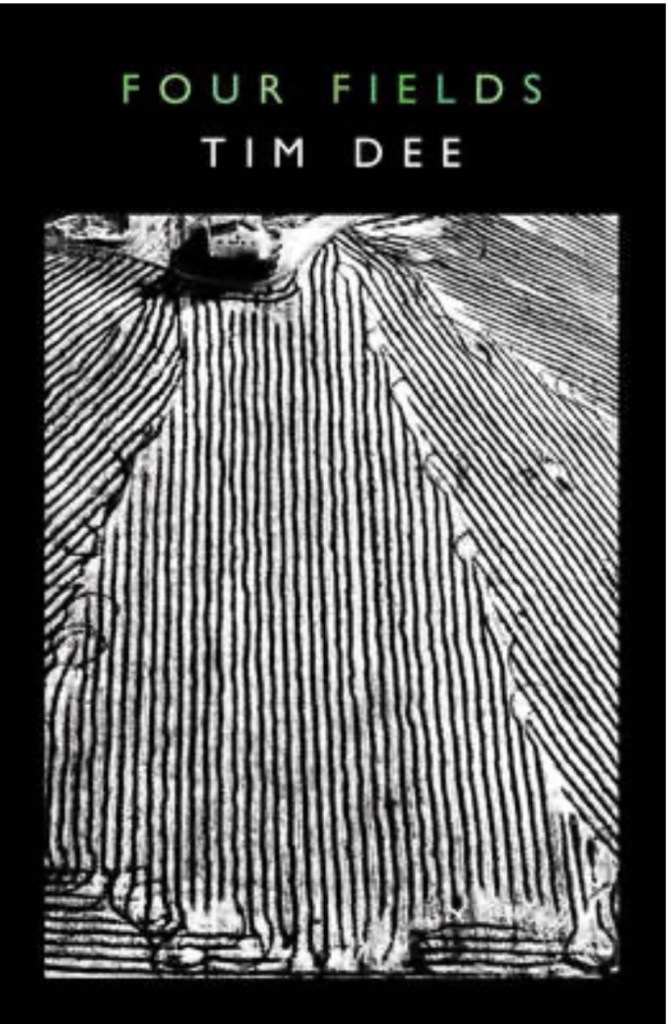
Here’s what I came up with – and apologies to Tim Dee – I have used a load of the images that he used because they were so captivating. I hope that’s OK ?
I have a tune that I hope evokes something of the feel I’m going for. I’ll try and record that sometime.
I’m calling it ‘Elegy for the Fen.’
Field and fen, stream and river, this is our life Sun and seasons, clouds and rain, water the earth
Generations have walked this land, mown, mapped and known Creation – will have our say – we can’t be owned
Sound of the grass; ground shining green Sound of the grass; ground shining green
We will show you how to live with the grain Whispers of Eden, guide you now lead us home
We’ve been worked by other men, ‘til we were dry But over and over and again, we’re saved by the leaking sky
Sound of the grass; ground shining green Sound of the grass; ground shining green
We have been orphaned from the land, find the future in the past.
Sound of the grass; ground shining green Sound of the grass; ground shining green
P.S. From the Hebrew Scriptures in the book of Job:
Crooks reside safely in high-security houses, insolent blasphemers live in luxury; they’ve bought and paid for a god who’ll protect them. “But ask the animals what they think — let them teach you; let the birds tell you what’s going on.
Put your ear to the earth — learn the basics. Listen — the fish in the ocean will tell you their stories.
Isn’t it clear that they all know and agree that God is sovereign, that he holds all things in his hand — Every living soul, yes,every breathing creature?
I think this is finished … maybe a couple of tweaks here and there. It’s taken a while, but I’m encouraged listening to an interview with Jackson Browne about songwriting. Two that I’ve listened to this week –
I have a tune and hear a fairly sparse arrangement at the start – maybe guitar and penny whistle, with bass drum coming in, and then some snare, with bass and accordion and mandolin in there also.
I’m keen to show the band, but it will have to wait until we’ve practised some other new material that we’re working on.
See my previous post for more info on the song.
Regeneration
Voice 1 I catch a glimpse of you – dancing in the field nearby Your arms are waving gracefully against a Monday sky Your bare head cold, with sisters by your side With winter still to came – All Hallows Tide
Voice 2 I see you standing still – alert for sound or sigh Your arms are steady, reaching out as if to touch the sky Your bare head cold, held high with pride Come dance with me, here by my side.
Voices 1 & 2 If only we could meet, but that shall never be Even for just one day – to be set free (rpt )
Voice 1 Time passes by, but I have not forgotten you You’re always on my heart, and in my view Now clothed in green, diamonds on your sleeve Your kisses blown, carried on the breeze.
Voice 2 Time was when I thought love was leaving us behind You’ve been the constant one, ever on my mind Now spring has come, and scattered on the ground Seeds of the future lie like snowflakes all around
Voices 1 & 2 I’ve got a feeling that our lives will never end The road is going over Jordan and beyond (rpt)
I’m not sure, but there seems to be a feeling that you don’t talk about songs that you’re writing, for fear of taking away the mystery, but this is a small room, and I know I can trust you as I share something I’m working on.
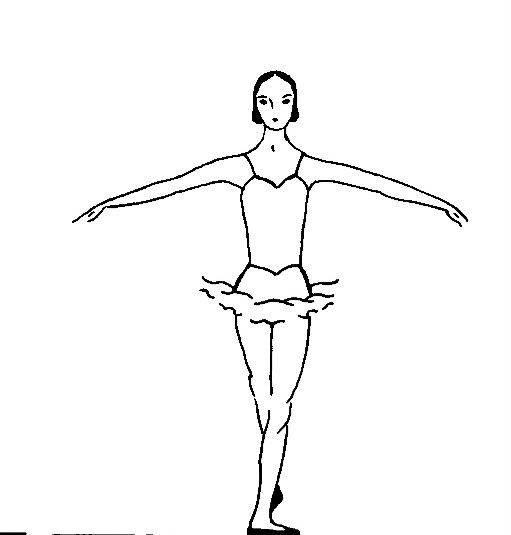
So, I was driving home to Gloucester from North Wales a few weeks ago, and I was enjoying the thousands of trees with their bare branches. I was thinking about the structure and shape of the trees in their winter clothing, and had a picture in my mind of a tree that had a crossed trunk at the bottom, as if it were standing with legs crossed like a ballerina.
Immediately a line came to me … I catch a glimpse of you, dancing in the fields nearby.
Another line came quickly … Your bare arms waving gracefully, against a Monday sky. (It was a Monday)
As the thoughts developed, I imagined a conversation between two trees in nearby fields. The first tree then says to the other tree something like … I see you standing still, alert for sound or sigh.
Then some words of a chorus came … ‘If only we could meet, but that shall never be…
Other snippets of words that I had at the time have been abandoned, and now it looks like this:
I catch a glimpse of you, dancing in the field nearby. Your arms are waving gracefully against a Monday sky Your bare head cold, with sisters by your side With winter still to come, All Hallows tide.
I see you standing still, alert for sound or sigh. Your arms are steady, reaching out as if to touch the sky. Your bare head cold, held high with pride Come dance with me, here by my side
Chorus If only we could meet, but that shall never be Even for just one day to be set free.
Then I stalled … wanting perhaps two more verses … maybe with a conversation in springtime now ?
Then, as often happens, there was some serendipity
First of all, I came across a blog about the Redwood tree, and how they. have shallow roots, but which extend for a long way under the ground, This allows the trees in the group to get strength from each other, and withstand the wind etc. There something here about how we are stronger together; the need for interdependence to survive. I began to think about telling the story of my two trees as one where they need each other, even though they ‘can never meet’
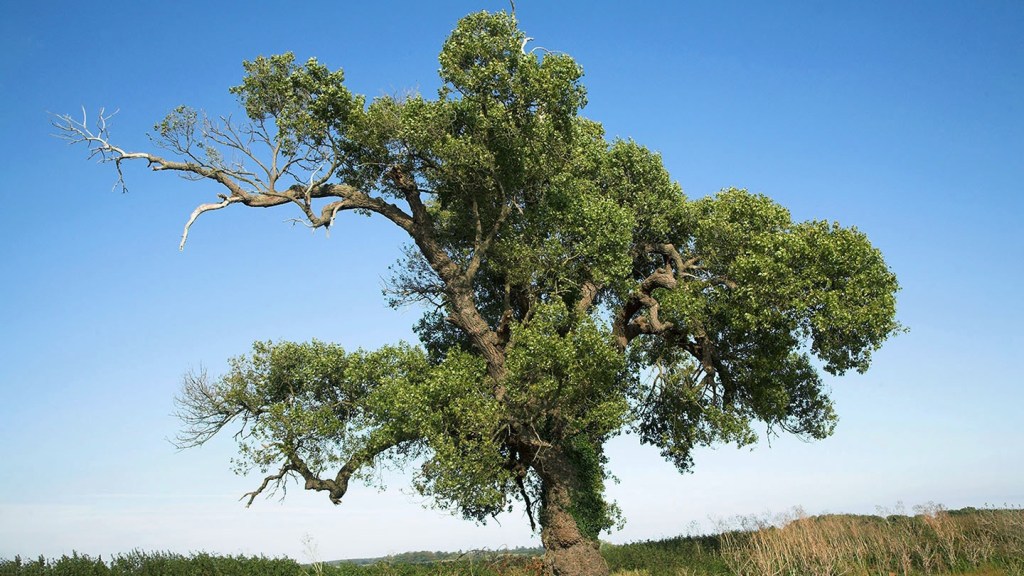
Then, another piece of good fortune – a windfall you might say ! We were watching an edition of a programme on BBC TV called Countryfile, where we were learning about the Black Poplar tree. This is a tree native to the UK – and not often seen, because of the decline in its habitat.
The Black Poplar is quite a rare tree, there only being 7000 in the UK. They are dioecious – which means that there are male and female trees. Now I knew this was the case with the holly tree, but hadn’t thought about other trees being this way.
The fertilised seeds need to fall on damp ground, making river valleys perfect places for this species. But the drainage of the land for agricultural has made it difficult for these wetland trees and they have slowly disappeared from the landscape. A recent survey estimated there are only 7000 black poplars in England, Wales and Ireland, of which 600 are female.
If you’re wondering where I’m going with this as far as songwriting is concerned, stay with me …
I have these two trees in my song so far … they’re looking at each other and are mutually attracted. But they are trees … and getting together is a problem.
So how about if they get together in another way ? Both male and female trees bear flowers in clusters called catkins. The female catkins are green and produce seeds, while the male catkin is red and produces pollen. If a male and a female tree are growing close enough together, then the seeds can be pollinated and germinate to give seedlings. How cool is that ! But in fact, there are so few wild black poplars left that it is unlikely they will pollinate each other. Instead, the large numbers of cultivated trees pollinate them resulting in no regeneration of true, wild black poplars. However, some projects, like the one seen on Countryfile, are aiming to encourage the growth of the wild Black Poplar through pollination.
So I’m working on verse three where the male is speaking – something like this
Time passes by, but I have not forgotten you You’re always on my mind and in my view Now clothed in green, with diamonds on your sleeve Blowing kisses, carried by the breeze.
The shape of the black poplar leaf is described variously as heart-shaped, or diamond-shaped … so I could have as the third line in the verse above S’s …
Now clothed in green, your heart worn on your sleeve
Whichever I go for, I’m now trying to get the angle on what the female might say … work in progress. I’ll try and bring in the colour red.
And then there will be a second chorus, which would have different words to the first chorus (does that make it technically not a chorus )? … which goes something like this:
The seeds are scattered underneath our feet A promise of the time, when we will meet.
(That is – in the next generation of the tree ….)
My misgiving is now that I have made it too clearly about trees, when one of my guiding principles is ‘show not tell’ ???
In chapter 43, Jeremiah has arrived in Egypt – against his wishes.
He had, over a long period, distanced himself from the ruling elite in Jerusalem and preached a message of God’s judgment against Israel. He had urged the leaders to stay in Jerusalem; God would have a future for them if they listened and stayed.
They had not followed God’s word as proclaimed by Jeremiah, but had insisted on going their own way – to Egypt where they believed they would be safe.
Once in Egypt, Jeremiah engages in a symbolic act that continues the message that God’s future for Israel lies not in Egypt but with Babylon.
Then the word of the Lord came to Jeremiah in Tahpanhes: 9 Take some large stones in your hands, and bury them in the clay pavement that is at the entrance to Pharaoh’s palace in Tahpanhes. Let the Judeans see you do it, 10 and say to them, Thus says the Lord of hosts, the God of Israel: I am going to send and take my servant King Nebuchadrezzar of Babylon, and he will set his throne above these stones that I have buried, and he will spread his royal canopy over them.
In this act, Jeremiah not only subverts Egyptian power, but affirms the superiority and God appointed influence of Babylon in Egypt. The large stones that he buries are the foundation for Nebuchadrezar’s throne.
This symbolic act is: daring – a public act; imaginative – seeing the power of the symbol; faithful – to what God has been saying; challenging – both to Egypt and to Israel.
What symbolic acts of resistance have we seen, or might we engage in, that would subvert, for example the power of oil and gas companies, or militarism, or the gun lobby in the USA ?
And behind all of the above there is something to do with that part of our human nature that is driven by fear of the other, and an overwhelming sense of entitlement and privilege.
Sometime last year, I heard a talk by theologian Ched Myers. He lives in Northern California, near the coast, and was talking about the way that biodiversity in his area has been affected by loss of water. Further upstream, industry is taking so much water off the river that the river has run dry downstream. Another story I heard at roughly the same time from a different source concerned the Jordan Valley, and how in a similar way, Israeli farms and industries were using so much of the river water, that there was not enough for people downstream. As I write this, I thought I would check just to see that I had remembered this correctly. So I googled: Amost Trust water scarcity Jordan valley. (I included Amos Trust in the search as I know them as a small civil rights organisation working in Palestine/Israel) The 6th hit down on the page was here – check it out.
Water scarcity is already a big problem, but it will reach crisis proportions for more and more people as time goes on.
Hearing these stories, I wrote down – And the water’s flowing freely, but never to our door. Water is both a material reality, and metaphor. It felt like I could write a song with that line in that could speak to both the reality of water scarcity and to situations of inequality, where a few have access to resources that are denied to the many.
The line stayed in my notebook for well over a year. Eventually I came back to it and wrote the song, Waterfall. You can listen to the song here.
Waterfall
She wanted freedom -but there’s was nowhere for her to go It’s hard to choose between a bus ticket and a winter coat
See how the water flows Freely the waters flow But never to her door Never to her door
He always thought – Just stand in line and it would come to you It might take time, but you would get to the front of the queue
See how the water flows Freely the waters flow But never to his door No never to his door
See how the water flows Ask if the water chose For some to have it all While others are in hell ?
Cool water Cool, cool water Water flowing free Water flowing free
See how the water flows What if the water chose To be a waterfall So no one is in hell.
See how the water flows Say that the water chose To be a waterfall To pour upon us all.
Today is Ash Wednesday, the start of Lent. A few years ago, I took ashes out into the town centre and offered ‘Ashes To Go.” – taking the ashes from last year’s Palm crosses and offering the sign of the cross to anyone who was willing to receive it. Ashes are a reminder that in the end, we all turn to dust. That reminder of our mortality, can be a signpost to turn to God, the ground of all our being.
One of my readings today was from Malcolm Guites book of sonnets, that traces the church year, with a sonnet for different seasons. He has written a sonnet for Ash Wednesday.
Receive this cross of ash upon your brow Brought from the burning of Palm Sunday’s cross; The forests of the world are burning now And you make late repentance for the loss. But all the trees of God would clap their hands, The very stones themselves would shout and sing, If you could covenant to love these lands And recognise in Christ their lord and king. He sees the slow destruction of those trees, He weeps to see the ancient places burn, And still you make what purchases you please And still to dust and ashes you return. But Hope could rise from ashes even now Beginning with this sign upon your brow.
Below is a short extract of the introduction to the sonnet that he originally wrote for it when wrote it over ten years ago. He has reposted the sonnet with a new sense of urgency here on today’s blog post.
As I set about the traditional task of burning the remnants of last Palm Sunday’s palm crosses in order to make the ash which would bless and sign our repentance on Ash Wednesday, I was suddenly struck by the way both the fire and the ash were signs not only of our personal mortality and our need for repentance and renewal but also signs of the wider destruction our sinfulness inflicts upon God’s world and on our fellow creatures, on the whole web of life into which God has woven us and for which He also cares.