Bible · community · Following Jesus

Then Moses Climbed Mount Nebo

We were round at some friends yesterday evening catching up not having seem them for a while. They were telling us about their recent short trip in South Wales. One day they went to the top of Pen-Y-Fan, hoping to enjoy the spectacular view from the top. The weather was clear when they started out, but by the time they had reached the top, it was covered in cloud !

They told us about their trip around Europe some years ago – that as they arrived at each new area, town, city, etc, they would look for a high place to be able to see the landscape around them, and to get a feel for where they were in that landscape. It might be a hill, or a tower, and anything that gave them some kind of overview. Maybe they’ll get to go back to Pen-Y-Fan one day and take in that glorious view.

There’s a hill near where we live called Robinswood Hill which rises to just under 200m metres. From the top, you can see all around – the city of Gloucester below us; the Malvern Hills to the North West; the Severn Valley to the South; Cheltenham and the Cotswolds to the East. It’s a wonderful spot.

Although we were thinking about literal high places, I wondered about another question to do with our neighbourhood, which is just under a mile from Gloucester City centre – If we imagined ourselves high above the streets where we live, what would we see, and how do we understand our place within it ?

In my reading just this morning, I read this passage from the Hebrew scriptures. It’s a part that describes the end of the life of Moses. Just before he dies, he is given the chance to look down from a high place (Mount Nebo), over the land that God has promised to Israel.

Then Moses climbed Mount Nebo from the plains of Moab to the top of Pisgah, across from Jericho. There the Lord showed him the whole land—from Gilead to Dan, all of Naphtali, the territory of Ephraim and Manasseh, all the land of Judah as far as the Mediterranean Sea, the Negev and the whole region from the Valley of Jericho, the City of Palms, as far as Zoar. Then the Lord said to him, “This is the land I promised on oath to Abraham, Isaac and Jacob when I said, ‘I will give it to your descendants.’ I have let you see it with your eyes, but you will not cross over into it.”
Deuteronomy Chapter 34.

It’s one of those coincidences that seem to happen from time to time – when you’ve been thinking about something, and then it pops up soon afterwards from a completely different place. It seems like God is telling you to keep thinking and asking what this is all about. I’m pondering what this might mean for us …

In the early church, one of the ways that leadership was described was to do with being able to see the ‘Big Picture.’ The Greek word is Episcope.
It’s not a word we’re particularly familiar with, but we do know other related words – microscope, telescope, periscope … all intruments designed to see something – something small, something far away, something above you …

If there were such an instrument as an episcope, it would be something that would help you to see the lie of the land around you. An overview. An important aspect of leadership is to be able to so this. It might mean that you’re less likely to get caught up in distractions. You have an idea of what the task is. You have a grasp of what’s needed.

Strangely, it’s about getting a broad view, but one that helps you stay focussed.

Part of the call to follow Jesus involves ‘getting to a high place’ to see the lie of the land. The essential tool for this work is listening. Listening to others tell their stories. Finding out what is important to our friends and neighbours. Learning how to serve those around us.

One of the other passages I read this morning was from St Paul’s letter to the church in Rome – these words seem ver relevant to the call to ‘Know Jesus, and to Make Jesus Known.’
How can people call for help if they don’t know who to trust? And how can they know who to trust if they haven’t heard of the One who can be trusted? And how can they hear if nobody tells them? And how is anyone going to tell them, unless someone is sent to do it? Romans Chaprter 10.

<><
Activism · Bible · Church · faith · Following Jesus · Political

The River Runs Down Hill

Water is a prominent theme in both the First Testament, and the Second. I was listening earlier this week to a talk by Ched Myers, speaking about both the ecological and the theological significance of water.
Listen here. Roll Like A River

There’s a lot to digest there, but I’ll just refer to sonmething he said at the end. He’s made the point earlier that in his context in Southern California, the river Ventura that once flowed all year round is now seasonal. This is largely because the water is taken off by residential needs and industry futher up stream.
That has all sorts of ecological consequences to the environment, as well as affecting those who live down stream.

The situation is not unlike the Jordan Valley, where many people, (Palestinians in particular) have to contend with water shortages, as well as the land itself being impoverished.

Already, we are seeing water as a commodity being fought over, and who wins ? The rich. We are familiar with wars over other resources like oil, but we are now realising that the main building block of life – water – is getting scarcer in many areas, and a cause of conflict.

In Southern California and the Jordan Valley, it is the environment and the people downstream that are affected.

Ched Myers draws a parallel between the ecological and economic issues here, and the way that water is spoken of in scripture.

There are many passages that speak of the life giving properties of water – coupled with water as an image of our spiritual lives. In Psalm 1 water is a symbol of God’s way of living.

Happy are those whose delight is in the law of the Lord, and on his law they meditate day and night. They are like trees planted by streams of water, which yield their fruit in its season, and their leaves do not wither. In all that they do, they prosper. (Psalm 1 verses 1-3)

In John’s Gospel we hear Jesus say these words:
Those who drink of the water that I will give them will never be thirsty. The water that I will give will become in them a spring of water gushing up to eternal life.” John Chapter 4 verse 14

It’s clear that water is not only essential for our very material lives, but is also a kind of code for what we might call abundant life, where there are no winners and losers, but where everyone has their needs fully met.

The Prophet Amos says this:
I hate, I despise your festivals, and I take no delight in your solemn assemblies.
Even though you offer me your burnt offerings and grain offerings,  I will not accept them;
and the offerings of well-being of your fatted animals I will not look upon.
Take away from me the noise of your songs; I will not listen to the melody of your harps.
But let justice roll down like waters, and righteousness like an ever-flowing stream. Amos Chapter 5 verses 21-24

Water flows down hill … but by the time it reaches the communities where Ched Myers lives, or the Palestinian People in the Jordan Valley, there is not enough left for everyone.

In my last-but-one post, I said that the Christian life is about ‘Gift and Task.’ This post is definitely about ‘Task’. The task of every one of us to seek justice for those who are furthest away from the source of blessing. Those who are on the margins where the resources do not reach, as well as the land that is impoverished by lack of water.

Grace and Peace.

Church · community · Following Jesus · music · Song for Today

Song For Today #25

We had a reading in Church today from the first letter of John that included these words …
This is how we know that we love the children of God: by loving God and carrying out his commands. 3 In fact, this is love for God: to keep his commands. And his commands are not burdensome ….
1 John Chapter 5 verse 2

And the Gospel reading was from John’s Gospel and included these words of Jesus:
This is my commandment, that you love (and unselfishly seek the best for) one another, just as I have loved you.
John Chapter 15 verse 12 (Amplified Bible)

Mike, the preacher today, introduced the Gospel reading by showing us that the first section of John 15 (that we had last week), is about the believer’s relationship to God, the second section today is about the believer’s relationship to others in the faith community, and the third section will be about the believer’s relationship to the world.

The phrase in the reading from John’s letter tells us that what God requires of us as we relate to one another is not burdensome. Straightaway my mind locked on to the word burden. Caring for one another in the community of faith is not a burden, because they are my brothers and sisters in Christ. There’s a pretty straight line from there to the song for today:
He ain’t heavy, he’s my brother

The road is long, with many a winding turn
That lead us to (who knows) where, who knows where?
But I’m strong, strong enough to carry him – yeah
He ain’t heavy – he’s my brother

So on we go, his welfare is my concern
no burden is he to bear, we’ll get there
For I know he would not encumber me
He ain’t heavy – he’s my brother

If I’m leaving at all, if I’m leaving with sadness
that everyone’s heart isn’t filled with the gladness
of love for one another.

It’s a long, long road, from which there is no return
While we’re on the way to there, why not share?
And the load doesn’t weigh me down at all
He ain’t heavy – he’s my brother

Words and Music: Bobby Scott and Bob Russell.
Recorded by the Hollies in 1969. A classic!

Carry each other’s burdens, and in this way you will fulfill the law of Christ.

Grace and Peace

Activism · Bible · faith · Following Jesus · Jesus · Political · World Affairs

In My Dream I Saw

I don’t remember my dreams very often, but I still have some snippets from a dream I had last night.
In my dream I saw a statue, standing up with something like a rod in its hand. The statue was a bit more than life size, maybe about 8 feet tall, and the rod was about 18 inches long and maybe 2 inches in diameter.

The next thing I saw was that the statue was lying down on its side, and the rod was held by two cupped hands of the statue. The hands were holding, rather than gripping the rod. Then someone was removing the rod from the cupped hands.

Then I found myself with a group of people in a room, all giving their different accounts of what the rod symbolised. Each one was describing a different angle on power

I can’t quite remember exactly what I said, but it was something to do with what happens when there’s a vacuum. There’s that saying – nature abhors a vacuum. When there’s a vacuum, something will rush in the fill that vacuum.

In the dream, the vacuum was created when the rod was removed from the hands. Suddenly, the person, or organisation that was holding the power is no longer in charge. At that point, other forces are quick to come and seize power.

In my dream, I went on to say that what was needed was an understanding of what the purpose of holding that power should be. The power should be exercised for the benefit of all. That means that everyone needs to have a say, no one should be left out.

At that point, I finished, and everyone applauded. I was surprised, but pleased that what I had said seemed to ring a bell with everyone present.

Here endeth the dream

So – a couple of reflections on the dream. We’re watching a series on Netflix at the moment called Godless. It’s set just after the American Civil war, and I think that may have been on my mind, and that somewhere deep in my unconscious is a memory of Abraham Lincoln’s Gettysburg Address from November 19th 1863, in the middle of the Amercian Civil War. In that speech, he famously said ‘That government of the people, by the people, for the people, shall not perish from the earth.’ The exact wording of the speech is uncertain, and Lincoln wasn’t the first to use that idea …. of the people, by the people, for the people.

My little speech in the dream seemed to be along the same lines …

The second thought is that today – March 28th 2021 – is Palm Sunday in the Christian calendar. The Gospel reading for Palm Sunday recalls how Jesus rode into Jerusalem on a donkey. As he entered the Holy City, the crowds acclaimed him as king shouting – ‘Hosanna to the Son of David.’ Hosanna means ‘save,’ and is probably used here as a special cry of joy for the one who has come to save, to rescue.

Here’s the prophetic passage from the First Testament book of Zechariah that is clearly seen in the events of Jesus’ entry into Jerusalem.

Zechariah chapter 9 verses 9 – 10.
Rejoice greatly, Daughter Zion! Shout, Daughter Jerusalem! See, your king comes to you,righteous and victorious,lowly and riding on a donkey,on a colt, the foal of a donkey. 10 I will take away the chariots from Ephraim and the warhorses from Jerusalem,and the battle bow will be broken. He will proclaim peace to the nations.His rule will extend from sea to seaand from the River to the ends of the earth.

In my dream, someone came and took the rod representing power from the statue. Whatever part of my subconscious that dream came from, the removal of the rod of power is something to do with a non-violent expression of a different quality of power to the oppressive displays of power that dominate our world.

For example, I’m thinking today of the non-violent demonstrations in Myanmar at the brute force and violence shown by the army.

I’m thinking of the non-violent demonstrations in our own city of Bristol, sadly hijacked by violent protesters.

I’m thinking of the peaceful protests against violence done to women after the murder of Sarah Everard, that ironically resulted in a police over reaction and more violence shown to the mostly women protesters.

I’m thinking of the peaceful civil disobedience of the protests of Extinction Rebellion back in 2019.

And I’m thinking of Jesus, riding into Jerusalem on a donkey, not a war horse, to announce God’s kingdom of peace. Jesus comes to demonstrate his power, that is so different to the power of the elite in Jerusalem, and to the imperial might of Rome. He comes to challenge the powers of his day. From the backwater of Galilee, Jesus now enters as it were, the Lion’s Den.

As I imagine the picture of Jesus on a donkey, I see that event as an act of non-violent resistance. The words of the ancient prophets are brought to life, and their words still speak today.

The words of Zechariah conjure up a vision not far from my dream in which I saw the symbol of power taken from the statue – I will take away the chariots from Ephraim and the warhorses from Jerusalem,and the battle bow will be broken.

It is a vision of peace that comes against all kinds of oppression – through the economy, through race, gender and sexuality.
Wherever such protests are made, the forces of power will rise to try and silence the voices of peace.

A prayer for today

God of ancient prophets, we thank you for your timeless utterances of truthfulness. Give us good ears to hear the reverberation of those old words as new voices ring out in our day. In his name. Amen.

Prayer by Walter Brueggemann (slightly altered)

Church · community · faith · Following Jesus · Theology · Worship

Re-Imagining Eucharist

OK, so this is two words. Having five word titles is a challenge I set myself, as well as being a web address (fiveshortwords.com) that was available! I think it’s time to allow myself to break the rule if I need to. Plus, as this is a post about rule-breaking, it seems appropriate.

So to Eucharist. The central act of weekly worship in many Christian churches. Eucharist was not a word I was familiar with when I was growing up. For the Christian community of my childhood it was known as The Lord’s Supper. Also known as Breaking of Bread. In other traditions it’s known as Communion, Mass and Eucharist. I’m using Eucharist here because it seems to be the word that is most used these days in a lot of Church of England circles. It’s the act of worship where we remember Jesus’ Last Supper, and his command to remember him by eating bread and drinking wine, just as they would have done at that meal.

In another post, I have written about the ‘High Hedge’ that separates those who are ‘in’, with those who are ‘out,’ in some churches. The highest hedge would mean someone had to be baptised, and confirmed in order to receive the bread and the wine.

None of the words that are used to describe this central act of worship suggest this high hedge. The Lord’s Supper suggests a meal, as does The Breaking of Bread. Communion suggests fellowship and intimacy. The word Mass (from the Latin Mittere, to send) is to do with being sent to be the God’s People For God’s World. Eucharist is from the Greek word meaning thanksgiving.

Maybe if we were being honest we should rename this family meal as Phractis – Greek for hedge. The word phractis itself sounds like fraction, which is when something is split into parts – in the case of Eucharist, those who receive and those who don’t.

A few years ago I heard Sarah Miles tell her story of coming to faith in Jesus. She had never been to church. She had never been taken by her parents. She was from a non-religious background. But one day she was passing a church and felt compelled to go in. When it came to the time for communion, she knew instinctively that this was something she wanted, and needed. As she held her hands out in expectation, someone put the bread into her hands. This was the start of her journey of faith.

As I read the Gospels, I see Jesus sharing meals with people without any restrictions. He eats with ‘tax collectors and sinners,’ people who were on the outside of the religious community. He knew that when you eat with people, connections are made. People share, not only their food, but themselves. The best meals are where we get beyond polite conversation to reflect on the big questions that our lives are asking us. Not every time we share a meal, for sure, do we ask these questions, but if we never ask them, then we’re not really sharing our lives.
What makes your heart sing ? What’s the best thing in your life at the moment ? Did you see the sunset yesterday ? How do I bring up my kids in this crazy world ? How do I put bread on the table when I’m out of work ? How can I look after my elderly parent as well as everything else I’m supposed to do ? How do I live with myself, when I know all the bad stuff that others don’t see ? ….. (you add your own question)

There is a ‘high hedge’ in the Gospels, but it seems to be all about following Jesus. That in the end is what divided people – into those who were willing to take a risk and see where it led, and those who decided to stick with what they knew. If there is a holy act that expresses this desire to be a follower, then it’s baptism. That’s the hedge.

But certainly in the established church in this country we got it the wrong way round. We made baptism available to everyone and anyone without fully explaining that this was a serious life choice.
And at the same time we said that you weren’t supposed to share in the family meal. There was a limit to the hospitality that we could offer.

It’s like if you invited some friends round for the evening. Come at 7, you said. So they arrive at 7 just as you are sitting down to your evening meal. And you ‘welcome’ them into the same room where you are eating, but you went on and ate your meal while they waited for you to finish.

What am I saying ? Throw out hundreds of years of church practice ? Pretend I know better ?

Just think how it would be if there was another way to share bread and wine. A meal that would be just as holy, just as mystical, just as life changing. A meal that just as clearly had Jesus at the centre, but which didn’t bar anyone from joining in. A meal that could happen anywhere, anytime, for anyone.

I wonder how many preachers, church leaders, priests and pastors would say Yes to this ? It might be threatening. It might be risky. It might be difficult to square with your theology.

And then again, it might be wonderful.

Grace and peace.

Bible · Church · faith · Following Jesus · Jesus · Theology

New Light On St Paul

OK. It’s been a while. I’ve had so many ideas but never got round to getting it down. Here’s a few thoughts from Tom Wright, otherwise known as N.T. Wright. He was Bishop of Durham for a while, but is best known as an academic whose whole adult life has been spent studying the life and writings of St Paul.

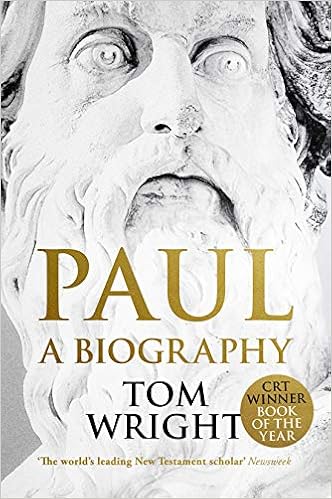
He wrote a book about the life of St Paul that came out three years ago. I haven’t read it, but heard him talk about it on the Nomad Podacst.

To start with, his name is originally Saul. He comes from a conservative tradition in Judaism, and as the book of Acts describes, will do anything to protect Judaism from what he sees as unhealthy, misguided influences. One of those ‘way out’ movements is of course, what he would see as the cult of Jesus. Saul is basically a fundamentalist, and will track down followers of Jesus, and condone killing them for the cause of religious purity. Hence the stoning of Stephen, one of the prominent members of what we would call the early church. Saul is at this point a violent man, determined to put a stop to this abberation of the faith that he treasures.

But to call it the early church is slightly misleading – at this early point in the evolution of the Jesus movement, we’re talking about a community that is mostly made up of Jews before the word Christian has even been uttered. When we read the word ‘church’ in our English translations, the original Greek word is better translated by ‘gathering,’ ‘assembly, ‘ or ‘company.’

Tom Wright reminds us how important it is to understand the first century context of the words that we read. Another example of where we might have been reading this wrongly is to do with what we might have called the ‘conversion’ of Saul. Growing up, I had the impression that on the road to Damascus, when Saul has his experience of Jesus, it is at that point that he ‘becomes a Christian.’
(You can read the account in Acts chapter 9)

But at that point in time, there was no such thing as a Christian. There was no separate religion called Christianity. Saul was a Jew who had such a profound and mystical experience of the risen Christ, that he suddenly sees that he has been mistaken, and that Jesus is in fact, the Messiah of God. He doesn’t stop being a faithful Jew, and would in all likelihood continue in exactly the same way as he had done before regarding his religious observance, but now seeing that the promised Messiah has in fact come – in the person of Jesus Christ.

After this life changing encounter, at some point early on, Saul disappears off to Arabia for three years. It’s not clear exactly where he went or what he did during these three years, but Tom Wright has a theory … first a bit of background:

Back in the First Testament, * the prophet Elijah is at a turning point in his life. He had just defeated the 400 prophets of Baal, and was on the run from king Ahab and his wife Jezebel. At this time of great stress in his life, where does he go ? To mount Horeb. Mount Horeb is essentially the same as Mount Sinai, where Moses received the Ten Commandments. So Elijah is going back to the place where it all started. The place where God made it clear that the children of Israel were a ‘set apart people.’ They had a call to be God’s people for the nations. At Mount Horeb, God meets with Elijah and he gets the commissioning and strength that he needs for the next phase in his ministry. God tells Elijah that he is to ‘Go back the way you came, to Damascus.’ Once there, he was to anoint Jehu as the new king of Israel.

Tom Wright’s theory is that Arabia was the region that included Mount Sinai. Where would Saul go to think through the experience that he had on the road to Damascus ? Maybe back to where it all started – to Mount Sinai. Saul’s roots are in the ancient story of Israel’s deliverance from slavery; the journeying through the wilderness; the call to live as the people of God. So Saul goes to Sinai, to learn what this new call to follow Jesus will mean. And at the end of those three years, where does he go ? Back the way he came, to Damascus. And once there he will share the news that a new king has been anointed – Jesus. And that this good news of Jesus is for all people, both Jew and Greek, men and women, slave and free. And that this new community will be different from any community previously known, because it will not be according to your ethnic group, or whether you were a man or a woman, or a slave or a free person. This new community will break all the rules and be for all.

I feel like I should read the book !

And, as I was pondering on this alternative, radical new community that we see in the book of Acts, it made me think about my own experience of the church, and to what extent the churches I have been a part of have been ethnically diverse, with men and women both accepted fully, with class, background, education and social status not being an issue. Sadly, it seems that churches by default become fairly monocultural, not at all the vision that Paul had … 2000 years later it’s still a work in progress. Additionally, there are movements within the church that see the growth of the church being most effective when this mono approach is used – because like attracts like. This is in sharp contrast to the kingdom vision of a diverse community, which although it is often a more challenging environment, has within it the possibility of fully enacting the principles of love. Such a Christian community is truly a thing of great beauty.

* Christians have generally called the first part of the Bible ‘The Old Testament.’ But there are dangers in that. It might lead us to think that we can leave all of that behind. Now we have the New, we don’t need the Old. The New Testament gives us everything we need. In a sense that is true, but we are greatly impoverished in our undertanding of Jesus if we do not understand his roots, which lie in the work of God through Israel. If we only know the New Testament, we don’t know the New Testament! There is so much richness in the books of Moses, the history books, the wisdom and the prophets that we need to attend to. There has been a move to call these writings ‘The Hebrew Bible,’ but others are more inclined to use the phrase ‘First Testament,’ which gives those writings a more exalted place than ‘Old Testament,’ and unlike the phrase Hebrew Bible gives them their righful place within the whole revelation of God’s love and purposes.

Grace and Peace

Bible · Following Jesus · Political · World Affairs

There Is None So Blind

A lyric from an old song “Everything is Beautiful” by Ray Stevens goes like this “there is none so blind, as those who will not see.”
In this form of a proverb, it might date back to 1546, but it probably has its roots in the Bible.

I was reading in John Gospel chapter 9 this morning. It’s the account of the healing of a man born blind. Now, because it happened on the Sabbath, when it was against the Jewish Law to work, an argument follows the healing – if Jesus was really from God, would he have done such an outrageous thing ?

As well as the physical healing, which enabled the man to see for the first time, there’s also the question of a different kind of seeing, which is to do with seeing the truth about how things really are, and making an appropriate response.

One of Jesus’ claims is to be ‘The Light of the World,’ which is about revealing how things really are. Enabling people to ‘see.’
The religious leaders take exception to this claim, and ask Jesus …. ‘Are you saying that we’re blind ?’

Some of the Pharisees near him heard this and said to him, ‘Surely we are not blind, are we?’ (John 9:40)

Jesus’ response is perhaps surprising:

41 Jesus said to them, ‘If you were blind, you would not have sin. But now that you say, “We see”, your sin remains. (John 9:41)

What he is saying in essence is this: they are not blind – they can see perfectly well. ‘If they were blind, they would have an excuse for not seeing the evidence of Jesus’ power. They are guilty because they have seen, and should have known better than to refuse the power of God.’ *
* Walter Brueggemann in ‘Gift and Task’ a year of daily readings and reflections.

In the Gospel, the religious leaders are more interested in preserving the status quo, and their position of influence. Jesus is a big threat to that power.

It made me think of current situations where people in power might see quite clearly where there is a need for change, but that change would threaten to take away their influence, so they hold on to their power. They should know better.

As always, the challenge is there for me too. Where should I know better ?

A Prayer For This Day · faith · Following Jesus · Prayers

Morning Prayer Through The Week

I have tried all sorts of ways of giving some structure to my prayer, and in lockdown have found something that is working for me. In the past I’ve found that most of the things I’ve tried have either too many words, or not enough to feel that I’ve done anything.
So – I’ve been collecting prayers – some from other sources, and some home grown, and have this to offer. Each day has a theme, and the same structure for each day, as follows

Opening Prayer.


The psalm of the day
(I’m currently using a book by Walter Brueggemann – Gift and Task – that has suggested psalms and Bible readings for each day – you decide how much and what exactly you put in here, but having a part of a psalm as part of it is, I think, a good discipline)


‘Kyrie’ prayer
The Kyrie prayer is is a short prayer that is important in Christian worship. It is a prayer from the heart about human need. God owes us nothing. Everything he gives comes from his mercy. (Kyrie is the Greek word for Lord)

Collect
A Collect prayer – so called because in public worship the prayer gathers together the silent prayer of the assembled company in one prayer.  It has a particular form as follows:
1 God is addressed
2 Something is said about God’s nature, or God’s work
3 A request is made
4 A reason for the request (usually in relation to what was said about God)
5 An ‘Amen’ or other ending. (what Padraig O Tuama calls ‘a bird of praise’

Scripture reading(s) for the day
See above … however much or little you need.

Prayer of thanksgiving or prayers of concern

Blessing

I also use this form of words before Prayer each day

The night has passed and the day lies open before us;
let us pray with one heart and mind. 
As we rejoice in the gift of this new day,
so may the light of your presence, O God,
set our hearts on fire with love for you. Amen.

So to the 7 days and 7 themes.

Sunday – Resurrection and new life
Monday – Creation
Tuesday – Justice and Peace
Wednesday – The Holy Spirit
Thursday – Following Jesus
Friday – Forgiveness
Saturday – The Communion of Saints – believers past and present.

On Sunday at the monent, I’m using the form of morning prayer from the Northumbria community. Since I use this in its entirety, I won’t include it here, for copyright reasons, but you can find it here.
I have included it, because it’s the one thing in the past that I was able to use every day for a couple of years without getting bored with it.

Bible · Church · community · faith · Following Jesus

It Never Struck Me Before

So. I’ve been listening to an interview with Alexander John Shaia. Fascinating. I had not heard of him before. He’s interviewed here on the Nomad podcast, and also in Rob Bell’s Robcast.
There are a load of things to talk about, but just an aside to start with – he talks about the Passover meal, and the central theme being slavery and freedom. It never occurred to me before that they wouldn’t all have gone with Moses!! Some would have followed him, for sure, but there would have been those who thought that they were better off staying in Egypt. They made that choice.

Now why didn’t I realise that ? I just assumed they all went. But of course some would have found the idea of such a radical move to be too difficult.

So on to where this is going to lead – to four questions that map the road of transformation.
I’m just going to try and summarise what Alexander was saying, but I hope you might go and listen to the interview, because I found it mind blowing.

We need to begin with a Jewish Passover:
According to the Ashkenazi tradition, the order of the Four Questions at the Passover meal is as followed:
Question 1: Why on all other nights do we eat either leavened bread or matza, but on this night only matza?
Question 2: Why on all other nights do we eat different types of vegetables, but on this night only bitter herbs?
Question 3: Why on all other nights do we not dip our food once, but on this night we dip it twice?
Question 4: Why on all nights do we eat either sitting upright or reclining, but on this night we recline?

These questions traditionally bring to mind:
Question 1: Eating matza commemorates how the Jews were in such a hurry to leave Egypt they could not wait for their bread to rise.
Question 2: Eating bitter herbs represents the bitter difficulties of life as a slave in Egypt.
Queston 3: Dipping food was a luxury reserved only for the aristocracy and upperclass in ancient times, so the practice of dipping is meant to reflect freedom.
Question 4: Reclining while dining was also a luxurious behavior historically, which stresses the privilege of freedom.

But Alexander Shaia refers to an older practice in Judaism at the time of Jesus that has four similar, but different questions, that might be paraphrased as:
Question 1: Thinking about the Exodus, when God’s people were set free from salvery in Egypt … Where in your life are you lost in a place of emotional paralysis, a state of being unfree, enslaved ?
Question 2: Thinking about the forty years when God’s people wandered in the wilderness … Where are you in a death experience ?
Queston 3: Thinking about the time when God’s people crossed over Jordan into the promised land … Where do you hear God’s new promise for you ?
Question 4: Thinking about life in that land of promise … What new action is God asking of you, for your life, the life of your community ?

So … in summary, the four questions relate to
1. The path of transformation includes times to consider making a change. How are are you going to respond ? Choice
2. The path of transformation will involve tension, and trials. Suffering
3. The path of transformation will include the offer of newness in some way. Gift
4. The path of transformation will challenge you to think about acts of service you are being called to give. Service

Interestingly, these four aspects of the life of faith were a central part of the practice of the early church in preparing candidates for baptism. Not surpisingly really, the church drew on the heritage of Jewish practice in making disciples of Jesus Christ.

Now here’s the thing … the early church also, according to Alexander Shia and others, linked these four aspects of discipleship to the four Gospels.
Matthew – addressed to the Jewish community – Choice.
Who will you choose ? Will you choose this new way in following Jesus ?
Mark – addressed to the Christian community in Rome, suffering persecution under Nero.
Stay strong as you seek to make Jesus the Lord of your life, even in the midst of persecution. Suffering.
John – addressed to the diverse Christian community in Ephesus, which was beginning to revisit old divisions
Even though you come from different backgrounds. Receive the gift of unity. Gift
Luke – addressed to the Christian community in Antioch.
Remember that you are called to serve. Service

So, when you think of the Gospels, think rather of one Gospel. The Gospel that is shown to us in four different ways, to help us understand the fourfold path of transformation.

I found these insights really helpful, and will be praying that I will be aware when I am being asked to make a choice about something –
The challenge of moving on to something new, and leaving other things behind.
The challenge of hanging in there when it gets tough
The challenge of seeing how I am being called to serve.

Grace and peace.

Church · community · Following Jesus

Nuggets From Elizabeth Oldfield (II)

Elizabeth Oldfield Part II. About the church and how we deal with those who are different to ourselves.

Some years ago, there was a married couple who had started on their Christian journey quite recently, and church was for them a new experience. They were amazed to be getting to know people in our church who acted without any self interest – just out of love and concern. It seemed that here was the perfect expression of community.

It took a while, but eventually they came to realise that we were fallible human beings, who were sometimes selfish, sometimes awkward or just plain difficult to get along with, but that the church was fundamentally a good place to be. That isn’t everyone’s experience, but Elizabeth Oldfield has a similar take ….

She says this about her experience of church. “After a while I came to realise that the church as an institution has a lot wrong with it; churches in general do not live up to the Christian gospel, or the calling of Jesus in any way, shape or form, but I’m less and less keen on focussing on just that. I feel like the more I spend time with really diverse groups of people who have no experience of church whatsoever, the more I realise what this gift (the church) is – this imperfect, broken, but beautiful gift. I have been in all kinds of (church) communities, and my experience is that they don’t always navigate every kind of difference well, but they do navigate a lot of differences well, and are certainly the local institution which is trying its hardest to navigate difference. There is at least an intention and a desire to notice difference and to model the way that we are supposed to be working with those differences, noticing our failings and modelling the kingdom of God.”

Grace and peace to you, particularly to those of you who have a calling to work for mutual understanding in situations or communities, or families, or organisations etc where there is difference and especially where tension is also present.

Elizabeth Oldfield is director of the thinktank Theos

and has a podcast – The Sacred