I have had so many thoughts and prayers over the last nearly two years, but not been able to put into words what I’m thinking and feeling.
Many times I have been on the edge of posting, but not been able to.
Today, I was listening to a short passage from the Gospel of Luke in my daily ‘Pray as you go‘ … here it is:
And the child’s father and mother were amazed at what was being said about him. Then Simeon blessed them and said to his mother Mary, ‘This child is destined for the falling and the rising of many in Israel, and to be a sign that will be opposed so that the inner thoughts of many will be revealed—and a sword will pierce your own soul too.’ Luke 2:33-35
The child is Jesus. Simeon is a priest in the temple in Jerusalem. Mary and Joseph have brought Jesus at 40 days old to present him to the Lord. The words said to Mary are disturbing. They point to the way that Jesus will speak truth to the powers of his day, and the opposition that he will receive as a consequence.
Having listened to the reading a couple of times, I was invited to think about a character that I identified with in the passage. Or maybe I would like to imagine holding the baby in my arms ?
I’m writing this as we are surrounded by ugliness. By actions and words that spread hate and violence.
We are in the middle of the unlawful and genocidal actions of the Zionist state of Israel.
In addition we have to contend with racism directed at those seeking refuge in our land.
All around we see forces at work that are not rooted in compassion and understanding, but cruelty and ignorance.
I imagine myself in the middle of all of this, and ask myself what do I do, or say.
Do I shout out ?
“From the river to the sea …”
Yes, I have joined in those chants, and will still do so.
Do I hold up a placard ?
“Free Palestine, save Gaza”
Yes, I have done that each week in a public space this year, and will continue to do so.
But today, I have an image of myself with thousands of people simply holding babies.
No chants,
No words,
No placards.
Just holding a baby in my arms.
To hold a placard I would need to put the baby down, or give the precious bundle to someone else.
To shout a chant I might disturb this sleeping infant.
The most important thing in my mind is to protect this baby, who speaks to me of vulnerability, of non-violence, of possibility, of innocence.
Maybe this could be a worldwide Christian witness to the self giving love of that tiny babe.
Thousands, millions of people simply holding a baby in their arms.
A witness to the disrupting power of non-violence.
Join me.
N.B. this would be intended as a symbolic protest, in case you thought I was suggesting we put real babies in danger.
Author: Jonnyfun.E
How Then Shall We Live ?
I’ve been catching up with a couple of people I haven’t come across before … writer and ex environmental activist Paul Kingsnorth, and mythologist and storyteller Martin Shaw.
Paul Kingsnorth has a very powerful and to me convincing take on the climate emergency- or rather how we are responding to the climate crisis. Essentially the responses are mostly not out of reverence for nature or the planet. They are a human centric response that is recognising the gravity of the situation, but aiming to deal with it in a way that enables us to continue our consumption driven way of living.
It’s a technological way of seeing things. We will, we must, progress in our expertise in devising new ways to enable the human race to enjoy life.
The argument goes – yes, It might mean defacing the countryside with solar farms, but it is all about saving the planet.
The question is – saving the planet for whom ? For the planet ? Or simply as the biggest project in selfishness ever ?
What is inconceivable to most of the human race is to work to consume less., travel less, use less power etc etc.
What is unthinkable is to plan for negative growth. At least for the richest communities.
But unless we do plan for negative growth we’re kidding ourselves if we think we can save the planet – at least, the planet as we know it.
As Paul Kingsnorth rightly says, everything is spiritual. What we need is not technological solutions, but spiritual solutions. (If solutions is the right word, which is probably isn’t)
Why would we expect that establishing outposts on Mars is going to work any better than the mess we have made of our home ?
How then shall we live ?
We need, as a race, to realise that we are not the centre of everything. But there’s a massive problem here, because for the most part, we live in a post God world where the only conversations we have are with ourselves. We’re not willing to engage in a serious conversation with the planet, or with our maker.
In people like Paul Kingsnorth and Martin Shaw, we have interesting signs of a serious grappling with this fundamental issue that everything is spiritual and until we accept that, we’re going nowhere.
Or rather, we’re going, just going.
So, It’s Been A While
Around 20 years ago, we came a across a small Human Rights organistion called Amos Trust … named for some words in the Hebrew Bible (The book of the prophet Amos chapter 5) …
But let justice roll on like a river righteousness like a never-failing stream!
The particular aspect of their work that we support is working for Justice and peace in what one middle eastern Christian has called ‘The Land of the Holy One’
Our introduction to this came when we learned about the wall of separation that creates enclosed, shut off areas for Palestinians. We learned about the restrictions on Palestinians, and the many inequalities that they suffer.
For 20 years now, we have been learning about the roots of these injustices … which go back over 100 years – with key moments like the Balfour declaration in 1917, which started the path for the Jewish state, and everything that has happened since.
We’re seeing that all play out in a horrific way now in Gaza, in the West Bank, and in the last couple of days, the escalation in Lebanon.
So – I was looking at a part of Luke’s Gospel, in the New Testament, as I was preparing to take a service last week in our weekday service of Holy Communion.
In the early chapter of Luke’s Gospel, we see Jesus healing people on the edge of socoety – outcasts. We see Jesus healing on the Sabbath, which in the eyes of the religious leaders amounted to breaking the commandment to keep the Sabbath holy. We see Jesus calling working class fishermen to be his close followers. We see him calling even a tax collector. Jesus is pronouncing forgiveness, another aspect of what he’s doing that would have outraged the religious leaders. His teaching is even openly critical of them as rule bound and narrow.
And now Jesus has been invited to the house of a pharisee – for them to check him out. Test him. See if he really is as bad as they think.
Now there is a woman – described as ‘sinful woman,’ who has very likely heard Jesus, or at least been told enough about him to know that she needs what he is offering – that is, the opportunity for a fresh start. She hears that Jesus has been invited to the pharisee’s house and she turns up. She would have sat around the edge of the room, hoping for some food when the meal has finished. She’s waiting for Jesus to arrive, and she has come to offer thanks to him for his teaching about forgiveness. She has come prepared with some perfume. Maybe she doesn’t yet know how this is all going to work out, but she’s there because Jesus is there. She is there in reponse to knowing that she is forgiven.
Then Jesus arrives. But something is wrong. Simon, the host, does not give Jesus the customary kiss of greeting, or provide Jesus with the oil and water to wash himself. It’s an insult, and everyone knows it. And the woman sees it.
So she decides to do what Simon should have done. She has no water with which to wash Jesus’ feet, but she has her tears, and washes his feet with her tears.
She has no oil to anoint his head, but she anoints his feet with the perfume she has bought.
Simon should have given Jesus a kiss of greeting, so she kissed Jesus’ feet.
I have heard many sermons on these verses, and they have often been used to encourage us to think about our worship. What is it that we bring to Jesus ? The woman brought what was most precious – valuable perfumed ointment. Should we not also offer to Jesus the things that are most precious – our whole self ?
That’s one way to read the verses. I would like to suggest another, that seems to fit with the way Jesus’ ministry is developing.
The woman is acting in solidarity with Jesus. She is confused as to why Jesus has not had the greeting that was usual. She understands that it is an insult. But she is willing to take a risk and do for Jesus what Simon should have done.
And how will Jesus respond, after the outrageous behaviour of the woman ? The assembled pharisees might have expected him, in his position as a religious teacher, (however much they might have been suspicious of him) to be uncomfortable, even hostile to what the woman has done.
But Jesus comes to her defence. He sides with her. He acts in solidarity with her. And by doing so, he will further antagonise the religious leaders and demonstrate that what he has come to do is not limited to working within the boundaries of what they accept. He has come to challenge the very dynamics of power that exist.
And the call to us is to follow his lead. To see where power is being used to oppress, and stand in solidarity with those who are suffering.
We want to stand with all who are suffering, whatever ‘side’ they are on. But as far as the land of the Holy One is concerned, we stand with the people of Gaza and the Occupied Territories of the West Bank, and campaign for a just peace that gives Palestinians equality and dignity that is rightfully theirs.
I Just Came Across This
In my reading from Celtic Daily Prayer today, I read this:
Being an adult involves carrying a load of responsibilities of our very own, burdens with nobody else’s name on them but ours, with each one of us bearing an unwritten biography whose chapters contain unheard of turns of fortune and unheralded feats of heroism.
Ted Dunne
And this …
Be open to the night…
Pray with open hand, not with clenched fist…
Shapes loom out of the darkness, uncertain and unclear: but the hooded stranger on horseback emerging from the mist need not be assumed to be the bearer of ill…
The night is large and full of wonders…
Lord Dunsany
There’s Something In The Water
I wanted to write a song about inequality and the idea that the rich have unequal access to resources – with the example of a river, where upstream factories and communities are taking all the water, so that the land downstream is depleted.
The end result was a bit different but linked. I’ve played it our band, (The Apple Snatchers), and they like it, so it’s provisionally in the set. We’re looking at doing a couple of gigs in the Autumn, which should be fun.
There’s something in the water,
floating down the stream.
It’s come from up the river,
I wonder what it means.
There’s moonlight on the water,
blue lights in the town
Sun’s up in an hour or so,
soon I will be gone
And it’s not just in the water
it’s everywhere around
You can see the people thinking
to move to higher ground
They don’t want any trouble,
they’ll just let it be
And sometimes these old eyes of mine,
they don’t want to see
And the river is deep, the river is wide –
it’s way too far to the other side.
We need you to survive,
you must carry on
We need you to keep going
or else we’ll all be gone
Can the oak tree stand forever,
its branches touch the sky ?
We can tell most any story,
but it’s hard to live the life.
And the river is deep, the river is wide –
is it too far to the other side ?
Let’s Try A New Direction
So … following on from my last post, and directly connected to the subject of economic growth, I’ve been listening to Rory Stewart and Alastair Campbell chat with Kate Raworth about Doughnut Economics
I saw Kate Raworth a couple of years ago at the Greenbelt Festival and she is going to be there again this year …
She developed something called ‘Doughnut Economics’ (or Donut Economics if you prefer).
Basically, imagine a doughnut, the kind with a hole in the middle. The inside of the ring describes a quality of living that no one should fall below. In other words, if you are in the hole, you are living below an acceptable line of economic well-being.
The outer ring of the doughnut describes the limit of our resources on Planet Earth. That is, if we are living outside the outer ring, it is going to be unsustainable.
Her vision is for thriving, not for growth. That is thriving for the human race, but also for the planet, because everything is connected. Her two key drivers are that life should be regenerative and distributive. Resources should be renewable, and should be shared.
In other words, growth and GDP (Gross Domestic Product) are not the measures we need. Our ability to thrive will be determined by meeting everyone’s basic needs, but without destroying the planet. Sounds good to me.
The podcast above is a great way to get into her ideas, and to hear Alastair Campbell and Rory Stewart respond to her ideas. As political animals, they see all the problems with implementing Kate’s ideas, although they get what she is saying, and appear to be supportive.
The problem is two fold. One is that her ideas would result in a levelling up of economic wealth. The richest would need to accept limitations on wealth in order for the poorest to have their basic needs met. The other problem is time. Even if we tried to move towards the new economics the planet is already past the tipping point.
Kate speaks so powerfully and passionately – and I suspect that unless we aim for something like her plan, we will all suffer the consequences. In the long run, If the poorest suffer, then so will we all. Or as someone else (I think, I forgot who) has said – no one survives unless we all survive.
.
Growth, Growth, Growth, Growth, Growth
I’ve been watching the election campaign, especially what the Labour Party are pitching to us.
So, as I’ve been thinking about this, the word growth has been a big aspect of what Keir Starmer has been talking about. I came across this website – taxresearch.co.uk – here’s a snippet
“I don’t believe in growth as an economic panacea. There, I’ve said it, and most economist will be horrified.
Why say so now? Because Rachael Reeves, referred to growth 58 times in her Mais lecture this week.”
Because it’s so good, I’m putting the whole post here: This is Richard Murphy …. He continues …
She, admittedly, said it was not the solution to all problems. But, you could be mistaken in thinking that she did not really believe that, given how often she referred to it, and how everything that she offered was premised upon the possibility of its delivery.
So why don’t I believe in growth?
Firstly, that is because the way we record growth does not in any way indicate the value of economic activity . As I used to say to students when I was talking about this subject, one of the easiest ways to deliver growth would be for everyone in a society to get divorced. The expenditure on legal fees and splitting up of households would significantly boost GDP, but the sum of human happiness would undoubtedly reduce.
Then there is the matter of distribution . Most measures of growth are not even related to GDP per head. Worse still, very few provide any indication as to who has enjoyed the benefits of that growth. The best example of the resulting nonsense is found in Ireland. Approximately one quarter of its GDP is made up of the profits of multinational corporations recorded in that country, none of which are attributable to any person living there. In that case, GDP growth in Ireland might bring no benefit whatsoever to its population as a whole, let alone any one Irish person in particular. More commonly, elsewhere, when we know that most GDP growth goes to those already wealthy, it is a particularly poor target for any society.
Then there is the sustainability issue. As a simple matter of fact, we cannot consume ever more physical resources on a finite planet without destroying its capacity to sustain us.
But most of all, I do not believe in growth, because I do not think that it is nearly as important as the goal of meeting needs.
We all know what needs are. We require clean air and water. Good food is essential for a good life. So too is warm shelter. And we need education so that we can integrate in our communities, and help advance their understanding.
Much of healthcare is about community provision, by necessity. And when the events that require a personal healthcare intervention also very largely arise as a result of randomised risk, it is always the case that the community as a whole is the agency best able to carry that risk, and so meet it. The same is true for so many other needs that have to be addressed if we are all to have access to a reasonable quality of life.
Nothing about this denies the existence of wants. Meeting needs does not say that wants should not be fulfilled. But there is an order of priority here. The meeting of wants is not nearly as important as the meeting of needs.
Implicitly, GDP does not recognise that fact. The pursuit of growth does not, therefore, do so either. For that precise reason, I think that both are morally suspect, at best, and profoundly ethically biased at worst.
Nor do, I think that either can be amended to address those deficiencies. Growth is the wrong goal. Meeting need is what we must do, for everyone. Only then can we consider meeting wants, and then only within sustainable limits.
For those who think that this suggests that we will have a miserable existence, think about what it is that have created all the most valuable memories and experiences in your life. I can almost guarantee that none of them related to material consumption that satisfied a want. Almost all of them will relate to an occasion when you shared an experience with others, whether that was an intimate moment, or a family event, or a concert, or some similar experience, such as the celebration of an achievement. What all these things have in common is that each also relates to the meeting of the need, whether that be be for emotional, intellectual, or spiritual well-being.
Meeting those higher order needs is harder, however, if our material needs are not met . It is very hard to be joyful when you are hungry, cold, destitute, or are living in fear. Meeting need is, then, the precondition of happiness. Supplying the wants of some, at cost to meeting the needs of others must always, in that case, be a sub-optimal objective. GDP growth is, in that case, always the wrong goal in economics.
That economics has moved far from its roots in moral philosophy is evident from its focus on growth . It needs to go back to its roots and talk about what is right. Meeting everyone’s needs is the right goal for economics. It is what any government should do. And that is why I will criticise any government that fails to achieve that, most especially if it does not even try to do so.
The World Of Wet Land
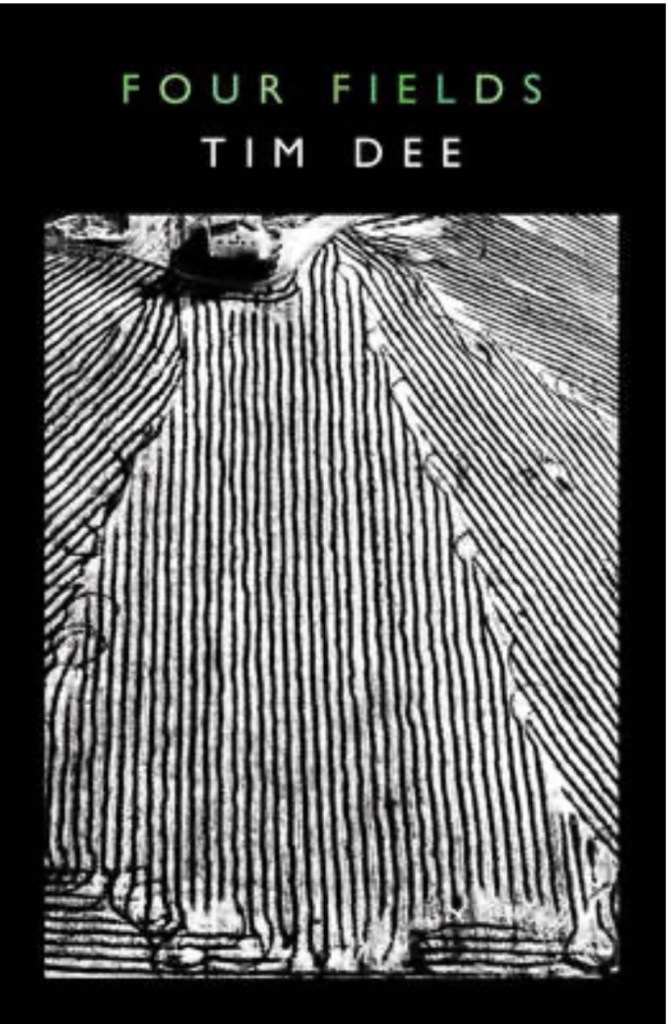
I picked up a book in a second bookshop that had an interesting cover. Then I read a random few sentences and thought … mmhh, this looks interesting.
It’s a book called Four Fields, by Tim Dee.

The writing is beautiful, and I really wanted to write a song after reading the first two chapters.
I’ve tried to stay somewhat within the sense of what he was saying- I hope I haven’t strayed too far.
Here’s what I came up with – and apologies to Tim Dee – I have used a load of the images that he used because they were so captivating. I hope that’s OK ?
I have a tune that I hope evokes something of the feel I’m going for. I’ll try and record that sometime.
I’m calling it ‘Elegy for the Fen.’
Field and fen, stream and river,
this is our life
Sun and seasons, clouds and rain,
water the earth
Generations have walked this land,
mown, mapped and known
Creation – will have our say –
we can’t be owned
Sound of the grass; ground shining green
We will show you how to live
with the grain
Whispers of Eden, guide you now
lead us home
We’ve been worked by other men,
‘til we were dry
But over and over and again,
we’re saved by the leaking sky
Sound of the grass; ground shining green
We have been orphaned from the land,
find the future in the past.
Sound of the grass; ground shining green
P.S. From the Hebrew Scriptures in the book of Job:
Crooks reside safely in high-security houses, insolent blasphemers live in luxury; they’ve bought and paid for a god who’ll protect them.
“But ask the animals what they think — let them teach you; let the birds tell you what’s going on.
Put your ear to the earth — learn the basics. Listen — the fish in the ocean will tell you their stories.
Isn’t it clear that they all know and agree that God is sovereign, that he holds all things in his hand — Every living soul, yes,every breathing creature?
This Is Something I Regret
So I have been thinking deeply about the forthcoming General Election. I live in a constituency (Gloucester) that has had a Conservative MP for some years- you have to go back to the early 2000’s to see a different colour.
But it is one of the seats that Labour might hope to win this time round (2024).
My question is … if I want to see a more progressive government, who will put the needs of the poorest first, and prioritise our The Climate Catastrophe, The NHS, Schools, Social Care and the Justice System (among others!) … how shall I vote ?
Possible answers … v
1. Vote with my heart and vote Green. Normally that might be seen as a wasted vote in our ‘First Past The Post’ system. But this time the Labour Party are likely to make the new government, so it might not matter what happens to Gloucester … so why not vote Green as the Tories are almost certainly out.
2. Vote Labour on the basis that you never know what will happen in an election, so play it safe.
3. Spoil the ballot paper – the whole system is rigged. So this is one way I can register a protest.
4..Don’t vote – for similar reasons, my Green vote won’t count anyway so why bother
We have a postal vote, and the papers arrived last week. At that point in time, I had decided on option 2, so I filled in the ballot paper and popped it in the post on Friday.
I was too hasty, on reflection. I think I should have gone with my heart. Much as I want to see the Conservative Party out of power, I actually don’t think it will be that different with Labour.
I’ve been reading a book by Ian Dunt – ‘How Westminster Works, And Why It Doesn’t.’ If even a fraction of it is a true reflection of our system of government, then we’re stuffed unless something radical happens.
By that I mean the first step being a reform of the electoral system to some version of PR.
Interestingly, this subject took up a fair bit of time on Radio 4 ‘Any Questions’ and ‘Any Answers’ programme. (But bearing in mind that only about 1 in 7 of people over 15 years of age listen to at least 15 minutes of Radio 4 in a week – (quite a low bar).
Added to that, as a supporter of Palestinian statehood, and incensed by the media coverage of the conflict in Gaza, I am discovering how deep a connection there is between the Labour Party and Israeli interests. That’s seriously worrying. See here
I wish I could take my vote back. No political party is perfect of course, but I believe that the Greens have it more right than the others.
Let me know what you think …
Every Day Is Nakba Day
Today is May 15th, the day when Palestinians mark the forced removal of Palestinians from their homes in 1948 to make room for the Jews coming from Europe to settle in Palestine. The name Nakba means catastrophe or disaster. Nakba Day is generally commemorated on 15 May, the day after the date in the Gregorian calendar of Israel’s Independence in 1948.
This poem is part of a collection of poems ‘Things you may find hidden in my ear,’ by Mosab Abu Toha, a poet from Gaza.
The poem looks back at the Nakba, which is a daily reality for the Palestinian people. It is being reenacted now in the West Bank as Israeli settlers take over Palestinian land, and in the horrendous war in Gaza, as many people are fleeing to a place of safety, probably never to return to Gaza. Once more a catastrophe is occurring, as history is repeated. May God have mercy on us.
My Grandfather Was A Terrorist
My grandfather was a terrorist—
He tended to his field,
watered the roses in the courtyard,
smoked cigarettes with grandmother
on the yellow beach, lying there
like a prayer rug.
My grandfather was a terrorist—
He picked oranges and lemons,
went fishing with brothers until noon,
sang a comforting song en route
to the farrier’s with his piebald horse.
My grandfather was a terrorist—
He made a cup of tea with milk,
sat on his verdant land,
as soft as silk.
My grandfather was a terrorist—
He departed his house,
leaving it for the coming guests,
left some water on the table, his best,
lest the guests die of thirst after their conquest.
My grandfather was a terrorist—
He walked to the closest safe town,
empty as the sullen sky.
vacant as a deserted tent,
dark as a starless night.
My grandfather was a terrorist—
My grandfather was a man,
a breadwinner for ten,
whose luxury was to have a tent,
with a blue UN flag set on the rusting pole,
on the beach next to a cemetery.
By Mosab Abu Toha