Uncategorized

Floyd


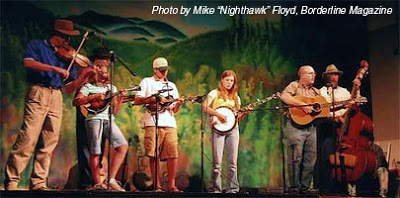
Today is Friday.  It’s the last day of the first class I am taking here.  Most people have gone off campus to return on Monday, and I am driving down to a little town called Floyd, to investigate the music.  http://www.floydcountrystore.com/

It’s a town that has one stop light, and sounds like going back to the 60’s – flower power etc.  The flower power era had a peace emphasis, but as far as I remember it was mostly about protesting against the Vietnam war.  One of the ways in which the Mennonite church has made a contribution in the last 50 years is in changing their focus from simply protesting and withdrawing from conflicts to engaging positively with conflict in a peacebuilding way.  I am looking forward to seeing what I can learn about peace and peacemaking as I visit the town of Floyd.
I’ll report back tomorrow hopefully.
Uncategorized

Out Of His Mind ? Mark 3:19b-27

Mark 3:19b-27  

I probably should have been putting links in to the relevant Bible passage, so here it is if you want to read it:

http://bible.oremus.org/?passage=Mark+2:23+-+3:6&vnum=yes&version=nrsv

Jesus comes home, at least that’s what it most likely means.  He was probably living at the home of Peter’s extended family.  The crowds are back again.  And for some reason, people close to Jesus try to ‘lay hold on him’.  They’re not happy with the way things are going, and they have some concerns about the way Jesus is in himself.  The Greek word is existemi, which means in this context – out of balance, out of alignment, out of his mind … 

That gives Jesus’ opponents a way in to score a point.  Their thinking might have been along these lines:  if Jesus’ own friends are concerned about him, use this to take advantage of the situation.  They go a step further and say that Jesus is evil – his power comes from the devil.

Well, if I’m looking at the Gospel through conflict eyes, there’s no shortage here!  All the various conflicts that have been referred to in the Gospel already are here! Conflict between Jesus and his own circle, (whether it is family or friends), between Jesus and the authorities and between Jesus and evil.

I’m making connections now with the political situation here in America.  I’m a novice when it comes to American Politics, so these observations may not be very deep or well informed, but what I think they do is point to the insecurities that we all feel, and the speed with which we can make judgments, usually to bolster our own position.

President Obama just made a speech at Cairo University.  

Link to the relevant page on the  BBC website (which has a video link for the whole speech)

http://news.bbc.co.uk/2/hi/middle_east/8082676.stm

The speech has generally been well received as good news.  It seems to build on other things that the president has said that indicate some changes of the approach to the Middle East in this American administration.

However, one of the members of our class, a church pastor, had a call on his mobile phone that took him out of class this morning.  It was a member of his congregation, ringing to ask if he (the pastor) thought that President Obama is the antichrist because of the nature of his engagement with the Arab (Muslim) world.

Sometimes we confuse what is good with what is evil.  We wrongly identify a work of God as a work of the devil.  Or sometimes we’re just not quite sure to make of what we see and hear.  Our beliefs and preconceptions prevent us from seeing and hearing things clearly.

Again, a question I want to ask is ‘What are you afraid of?’

Uncategorized

Engaging the Powers. Mark 3:13-19

Mark 3:13-19

In which Jesus appoints 12 to be apostles (messengers of the Kingdom).  In common with elsewhere in the Gospels, Jesus sends his followers out to do three things:
to proclaim the message of the Kingdom, to heal and to cast out evil spirits.
We’ve been having some discussions in our class about the nature of evil and what it means to confront evil.  Experiences from the two thirds world suggest that our post enlightenment scientific world view is not capable of explaining all that we see and experience.  This comes as a bit of a shock to those who think that science is the end of everything.  (The view that a scientific worldview has put an end to other ways of seeing the world, along with the view that science is also the end (as in goal) of everything).
One of our friends here is from a Mennonite congregation in Colombia.  Like most Christians working in similar settings, he has witnessed individuals being delivered from the power of evil spirits.  His view is that evil presents itself in different ways according to the culture.  Evils in the Global North & West are more likely to be encountered in the structures and institutions that work to maintain oppression and injustice.
What I am learning here is that there is much to be done, in different ways,  to engage with the powers that prevent people from living with peace and justice.  Part of the Mennonite way of engaging with evil is a commitment to Pacifism.  However this does not equate to passivism!  
‘The ‘Pac’ part is traced back to the Latin word, Pax that means peace or harmony.  Fism derives from the suffix ficus which comes from the Latin ficere that means to act or take action.’  
The word pacifism then is to do with acting in such a way to bring peace.  In the Bible the Greek word eirenopoios (peacemakers, Matthew 5:9) is translated into Latin as pacifici, which means those who work for peace.  
I am praying that those of us who would call ourselves followers of Jesus discover more about ways of living such that peacemaking and peacebuilding flow from our daily lives.
Uncategorized

Crossing Boundaries Mark 3:7-12

Mark 3:7-12
In which Jesus is followed by great crowds.  Jesus’ fame has spread!  They come from many different places, including Tyre and Sidon.  In Matthew’s Gospel, (15 v 21) Jesus meets a Canaanite woman from this region.  It’s clear that Jesus initially doesn’t want to have much to do with her, but as the conversation develops, he decides to help her.  His mission would cross boundaries of language, ethnicity and background.


It struck me that here in Mark 3, Jesus is already attracting attention from people who come from different areas, and different ethnic backgrounds.

Today is an especially good day to remember this as today is Pentecost Sunday, in which Christians remember the coming of the Spirit to all peoples.  We thought about this in church today.  (I went to one of the Mennonite churches in Harrisonburg today)

To convey to the children present that God’s Spirit is at work all round the world, we heard a verse of the reading from Acts 2 in Arabic (Egypt), Portuguese (Brazil), German (American with German antecedents), Chinese (China), and Kirundi (Burundi).

Today we celebrate the power of God’s Spirit to bring together people from all backgrounds. Really  Good News not only travels fast, as it has done here in Mark’s Gospel, but it travels far.  It travels across boundaries that are otherwise impossible to penetrate.

In my time here, I have reminded of the central message of peace in the Gospels.  The ‘Jesus Project’ is at its heart one of peace and reconciliation.  

Uncategorized

STAR

I have three more days to go with my course on Biblical Foundations for Peacemaking.  I have decided that the best use of my remaining time in the US would be to take advantage of what’s on offer here at the Summer Peacebuilding Institute.  So I have put my name down for what they call the STAR course – STAR stands for – Strategies for Trauma Awareness and Healing.  

It includes a whole range of material including conflict transformation, trauma healing and restorative justice.
I went to a brief introductory meeting on Friday and I’m really excited about the possibility of getting on the course.  (I think I will if there’s space – it’s almost fully subscribed)
One of the things I learned in the brief introduction was to do with the length of time it might take to find healing from a traumatic incident, or set of circumstances.  The recovery time is related to the length of time that a person has been experiencing trauma.
So for someone who has lived in a war affected area for years, or someone who has been abused for years, the recovery is not going to happen overnight.  The work of bringing healing is not likely to be a quick fix one, but one that takes commitment to the long term.
But for now, I must get back to my reading for tomorrow’s class.  A great little book called ‘Blessed are the Pacifists’ by Thomas Trzyna. (About the sermon on the mount)
Uncategorized

Brief Encounter

I’m here in Harrisonburg Virginia, doing a Peacebuilding Summer School.  Today is Saturday, a day off, and most people have gone to Washington D.C. for the day.  Steve and I decide to go up into the Shenandoah National Forest and do some hiking.  The weather is glorious, and we walk down from the road to a magnificent waterfall.  The hike back up is strenuous, and all the way I’m thinking about those hardy souls who thru walk the Appalachian Trail.

Just as we are approaching where we parked the car, we cross the AT, and there coming down the track are two women with large rucksacks.  I waylay them to find out if they are walking the whole trail.  They are!  They started three months ago (That would be the beginning of March), and expect to be in Maine by September.  We wish them well, and watch them disappear up the track to the North.
Uncategorized

Security Across A Divide


After 9/11 the Muslim community here in Harrisonburg Virginia felt very insecure. In a largely traditional Christian area, some Muslims felt afraid to go out even to shop. The Christian churches in the town made contact with them, to assure the Muslim community that the churches were there to support and help – for example to accompany them to the store to do their shopping.

The place where Muslims felt safest was store run by Old Order Mennonites. Two peoples with deep roots into their faith tradition, very different, but one providing a safe place for the other. As one Muslim woman put it “They wear the veil, we wear the veil”

Uncategorized

Learning

One of the great things about being here, is meeting people from different countries, and hearing stories of life and faith, often in places where there is ongoing violence and injustice. I can’t go into any detail on this blog, aware that anyone can read this, and not wanting to put anyone in a dangerous position. That comment alone is enough to remind me that however much we want to be open and talk freely about these things, there is a wisdom that is needed here.

Perhaps it is enough for the moment to say that this rich environment gives me stories that, even if I cannot share them in this medium, will give me the encouragement and some of the resources that I need to connect more effectively with those who speak from another faith tradition.

In class today we were talking about the need to speak from ‘deep to deep’ in our inter denominational and inter faith dialogue. By that I mean – we need people who hold their faith positions strongly and passionately to be willing to engage with others with a different viewpoint. Dialogue, particularly inter-faith dialogue is viewed by some with suspicion, and a concern that we might be ‘selling out’. The result may be that it is those more on the fringes that engage in dialogue, those who therefore have less at stake.

It is important that those who have very deep convictions are willing to enagage with those who are different.

Uncategorized

Crazy Like Jesus


 This post is about just one of a collection of ‘stories of ordinary people behaving with extraordinary hope’ that are told in a book by our class teacher – N.Gerald Schenk.  The book is entitles ‘Hope Indeed!”


http://www.amazon.co.uk/Hope-Indeed-Remarkable-Stories-Peacemakers/dp/1561486329/ref=sr_1_3?ie=UTF8&s=books&qid=1243631863&sr=8-3


Our class teacher Gerald tells us about Lazar, a young man, a Serbian Christian.  Gerald had been asked by the pastor of the church to speak to a gathering of the young people in the church, and this was on the eve of the armed conflict between Croats and Serbs. The pastor knew that the young men of his congregation would soon be called to join the army. He had come to a pacifist position himself, but wanted someone from outside the church to speak to them.

So Gerald came and outlined the various positions that Christians have taken on the question of war. The young man, Lazar answered by saying: ‘That’s all well and good, you’ve told us the different viewpoints. But in ten days time I will be conscripted, what should I do?’ Gerald answered that he could say what he himself would do, but that is what up to everyone to make their own decision. Gerald had grown up in a peace church tradition, and were he in the same position, he knew that he would receive support, but L was in an entirely different situation, and to be a pacifist in his context would be entirely different.

Lazar decided to go into the Military, and to try and be a good Christian witness. He drive lorries, which meant that he was not involved directly in combat situations. He explained to his comrades his reasons, but was unable to make any real impression on them. However at one point he was ordered to drive a tank in an attack on a village. He had no relatives there, he had none of the acceptable reasons to refuse, but he did refuse. As a consequence his conmmanding officer said ‘Get this man out of here, he is not sane!’ Lazar was sent to a military psychiatrist, and tortured, and eventually the military authorities let him go back to his unit – as a non combatant lorry driver. At this point, his comrades were interested. They wanted to know why he had made the stand, which had been so costly to him.

Now that there were actions to observe, as well as words to listen to they were intrigued. As a result, eight of his comrades became Christians, and two are known to be faithful to this day.